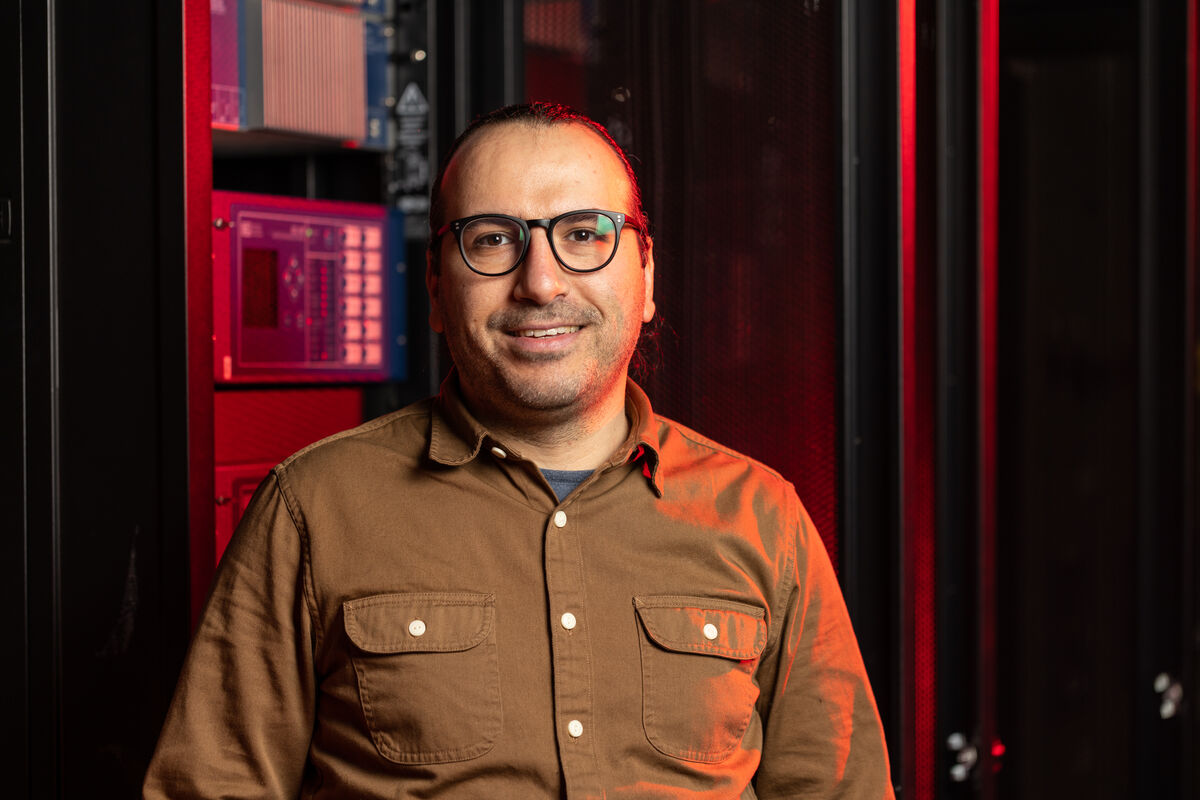
Mahmoud Kabalan, associate professor and director of the Center for Microgrid Research at the University of St. Thomas, spoke with StateTech about how microgrids can help state and local governments manage the rising energy and cooling demands driven by artificial intelligence. Kabalan explained how microgrids operate alongside the main electrical grid and why their ability to provide independent, resilient power makes them an increasingly important tool for supporting data centers and sustainability goals.

From the article:
Artificial intelligence, particularly generative AI, is putting stress on the power and cooling capacities of data centers around the world. With state and local governments embracing AI for a growing range of workloads, the pressures around on-premises power use have never been greater. ...
What Are Microgrids, and How Do They Work for Government?
A microgrid is a small, self-sustaining electrical system that can operate independent of the main electric grid.
“Its main feature is that it can operate in parallel with the grid. When the grid is out, whether it’s an emergency or a planned outage, the microgrid can keeps the light on locally, and when the grid comes back it re-engages with the grid in a seamless fashion,” says Mahmoud Kabalan, associate professor and director of the Center for Microgrid Research at the University of St. Thomas in Minnesota.
Microgrids also support energy generation. For state and local governments, “if they have their own solar, if they have their own wind, they’re making energy,” says Steve Gillum, solutions manager for power and cooling at CDW. In this way, “the microgrid really is going to allow campuses to be a little bit independent of the utilities, and to support sustainability as well.”
Many public institutions are already rowing in this direction.
“Many governments have buildings with intense cooling and heating requirements, and they have backup generation, typically for emergency operations,” (Kumaraguru) Prabakar says. “Some have small microgrids, for medical facilities or supercomputers. They may not call it a microgrid; it’s just a backup source.”