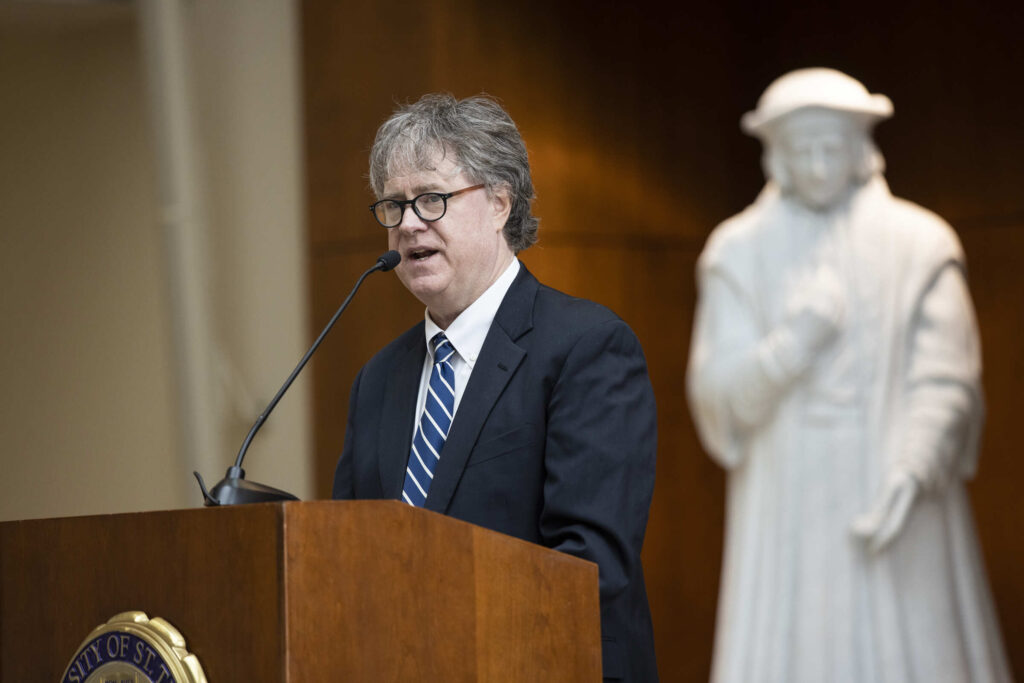
Mike Porter, clinical professor of marketing at the University of St. Thomas, joined the “Homegrown Hustle” podcast to unpack the strategic realities behind social media in modern marketing communications. Porter reframed social platforms as shared spaces within the PESO model, emphasizing that social media should serve as a conduit that drives audiences toward owned assets. He highlighted the importance of audience segmentation, message consistency, authenticity and aligning content with the broader persuasion pathway from awareness to belief to action.
From the conversation:
Mike Porter: OK, you get a lot of information from Facebook. If you represent the target I’m trying to reach, then maybe I need to focus on Facebook as opposed to something else. Or I can look at analytics on the web that say people who want to buy baked goods and try new things are between 18-30, or 35-55. Those are different groups. They’re going to use different parts of the social media landscape.
It becomes even more complicated if we’re thinking about social media use in B2B, because in my experience, every industry is using it a different way. Some businesses are on LinkedIn. Others are using Facebook. Others are using something that feels archaic because it’s two years old. I’ve seen industries embrace a platform organically. Bob and Cindy from two different companies start talking about their stuff, people get attracted there, and it becomes a thing. If it’s organic and it’s a community, you need to figure out how you’re going to connect to that community. You don’t care what platform it’s on because they chose it.
Matt Eickman: Because that community is going to have a shared type of thought, and they’re going to go to the same places and potentially purchase the same products.
Porter: Exactly. Not all your customers are the same. Maybe you have two or three key segments. One cohort is 18-25, and the other is 25-45. The 25-45 group might be married or about to be married and focused on family. That’s different messaging from the 18-25 group. Maybe they’re on the same platform. If there’s overlap, you need to combine things that speak to both audiences, or create content specifically for one and then for the other.
A good marketer, if there is overlap in key markets, won’t create things that alienate the secondary market. They should work together. One way to think about this is if you’ve seen print ads with people at a picnic. The younger people in the image are doing activities aligned with your product, and the copy tells a story aimed at people more my age than your age. The people my age read the copy, and the people your age look at the pictures. We’re doing both at the same time without alienating either group.
Eickman: That’s some psychology stuff.
Porter: A little bit. What I’m suggesting when it comes to social is, if you know there’s going to be overlap and the same reel will be seen by both kinds of people, how do we split that? Maybe think about how we honor our secondary audience with this, even though we know our primary audience for that particular delivery is different. None of this has to be perfect. Your job is not to be the best social media deployer in the Twin Cities. Your job is to sell what you’re selling.
So you either need help from people who know what they’re doing, or you say, I know who my people are and I know they care about these messages, so I’m going to speak to that. Continuity is huge for me as a marketing communicator. It’s important that you think about the breadth of what you’re doing, what you’ve done in the past, and where you want it to go. Evolution is fine. That’s not breaking continuity. But the thread should still be there. Our message and how we present our organization should stay consistent. We may use different words, but it’s not about the words, it’s about the voice. ...