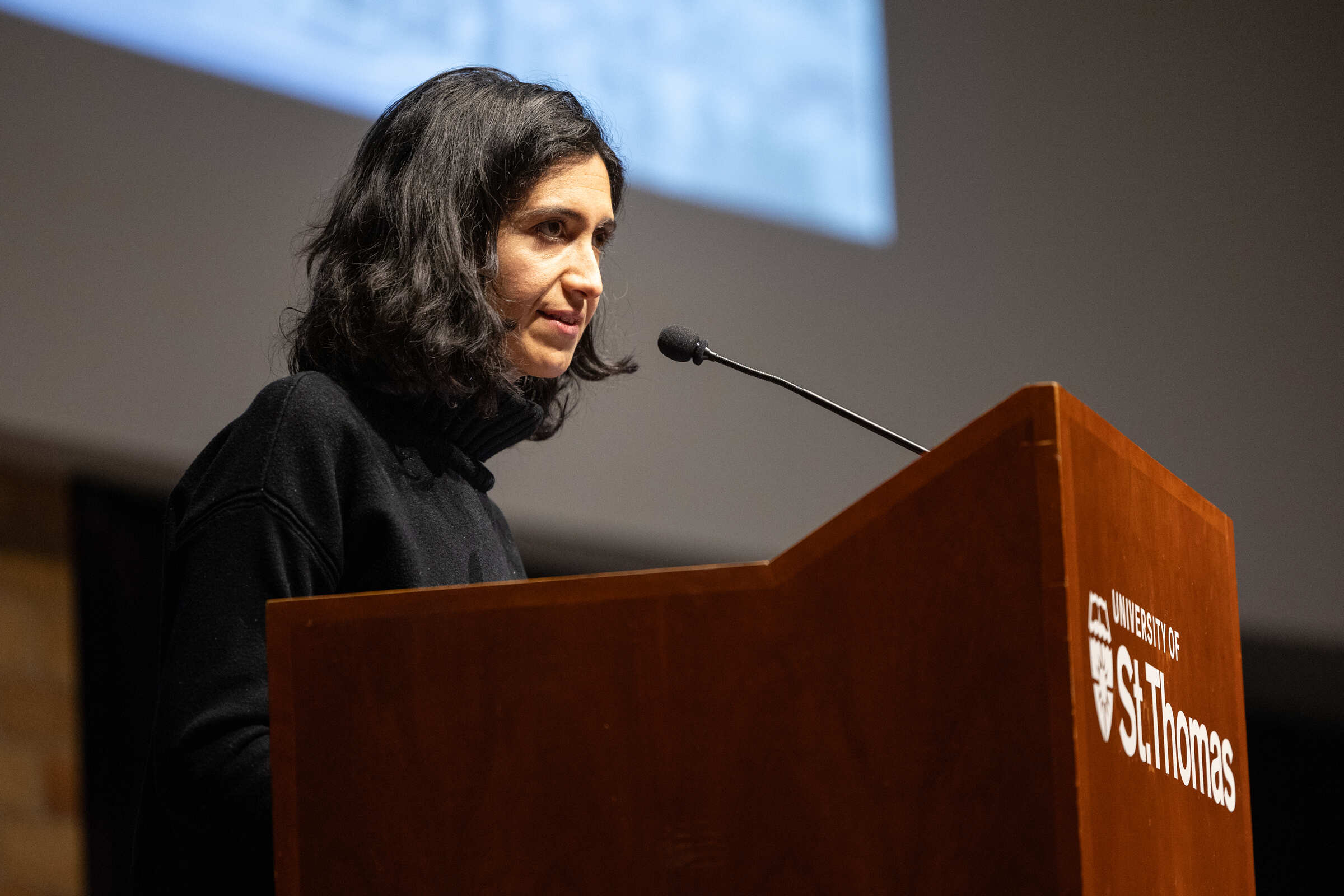
Shaherzad Ahmadi, associate professor of history at the University of St. Thomas, spoke with MPR News about the ongoing conflict between the United States and Iran one month into the war. In the conversation with host Catharine Richert, Ahmadi analyzed what has unfolded so far, what may come next, and how recent comments from President Donald Trump could shape transatlantic relations with Europe.

From the conversation:
Ahmadi: My topline takeaways were: 1) Europe is on its own. 2) Trump's threats to Iran are serious, and that the Islamic Republic needs to be worried about a potential nuclear bomb. "Stone age" evokes a very serious attack in my mind. 3) He is hedging his bets. He's not quite sure how he wants to proceed, and he wants to both couch this as a mission accomplished moment – "We're done, 32 days; and we have 3-4 more weeks; we're not sure if we can open the Strait of Hormuz. Maybe it'll open naturally, maybe it won't, but it's not our problem.
Ahmadi: In my view, Israel's interests are very different than America's interests. On the one hand, Israel would like to destabilize Iran. Regime change would be wonderful from their perspective, because of course the Islamic Republic has been funding all kinds of horrible mischief within the Middle East. The Islamic Republic is much hated within Iran, so this seemed like a feasible project from Israeli perspectives, maybe. From Trump's perspective, what does it really matter? For him, if his goal was a victory lap before the midterms, which it seems like that was the goal, it hasn't delivered. That would have needed to have happened two weeks ago. Now he's mired in it. So what the Israelis want and what the US wants are two different things. And we probably won't end up with the results either wants...