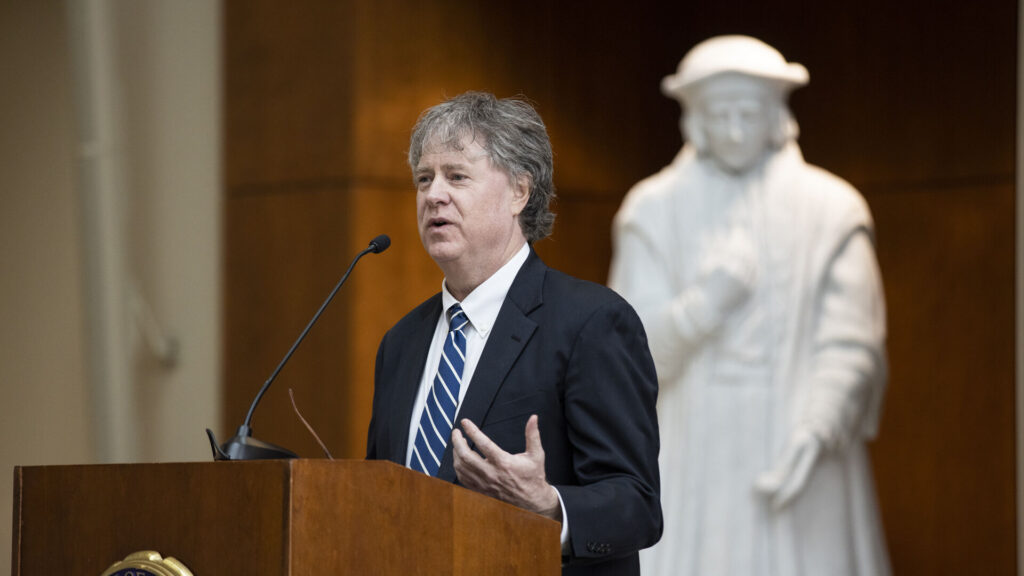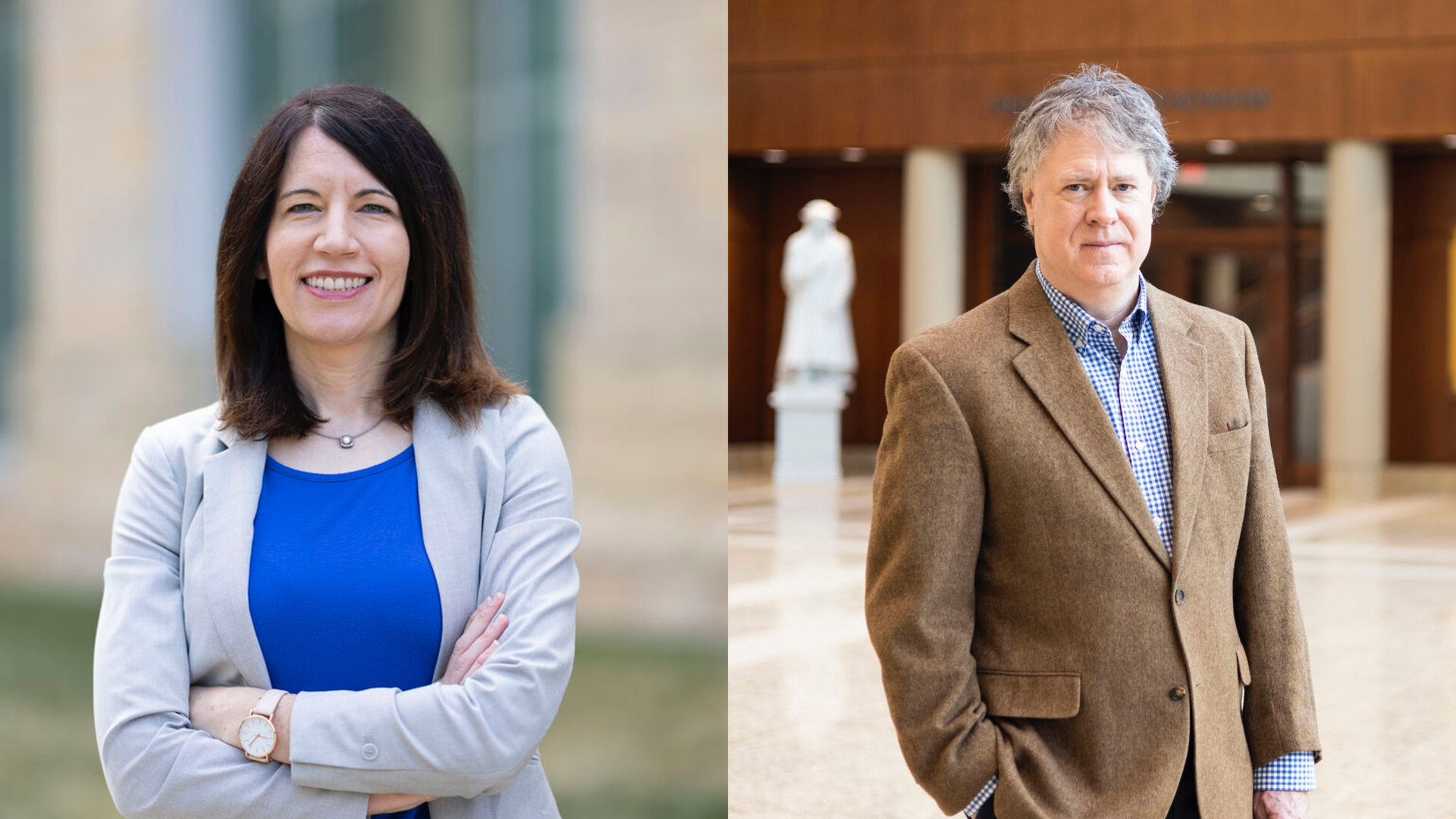
University of St. Thomas School of Law professors Rachel Moran and Mark Osler were featured across national and local coverage examining growing tensions between federal courts and immigration authorities in Minnesota. The professors provided legal analysis on Chief U.S. District Judge Patrick Schiltz’s actions addressing ICE compliance with court orders, including concerns over detainee releases, access to hearings and the authority of federal judges to enforce rulings during large-scale immigration operations.

From Bloomberg Law:
The chief judge of the Minnesota federal trial court rebuked the Trump administration’s approach to its sweeping immigration operation in court filings this week, adopting a sharp tone seen as out-of-character for a judge known to be even-tempered and conservative.
Chief U.S. District Judge Patrick Schiltz, a George W. Bush appointee, didn’t mince words Monday ordering the acting director of U.S. Immigration and Customs Enforcement to appear personally to show why he shouldn’t be held in contempt for repeatedly defying court orders on the release of detained immigrants. ...
Top officials and congressional Republicans have, in turn, lashed out at judges hearing those legal challenges as left-wing activists.
Still, his latest order threatening contempt proceedings against an administration official is “incredibly unusual,” said Rachel Moran, a law professor at the University of St. Thomas in Minnesota.
“When you have a Bush appointee with conservative credentials who is not prone to issuing orders like this, it does make you pay more attention, or at least make the world pay more attention,” Moran said.

From POLITICO:
... “He comes from a traditionally conservative point of view, but he’s a rule of law guy,” said former federal prosecutor Mark Osler, now a law professor at the University of St. Thomas. “He’s been regarded as a rock-solid, generally-conservative judge on the bench, but with that comes things other than loyalty to the administration.”
As a newly minted lawyer, Schiltz lamented ideological orthodoxy among elite law students and described the faculty of those schools as “overwhelmingly leftist.” But his own early political leanings were somewhat murky. He worked as an intern and paid staffer for Sen. David Durenberger (R-Minn.), but also served as a delegate at Democratic Farmer-Labor Party conventions.
After law school and his Supreme Court clerkship, Schiltz returned to Minnesota and spent several years handling civil litigation at Faegre & Benson.

From WCCO Radio:
Jordana Green: So talk to us about what’s happening. Is the federal government slow walking legal requirements?
Mark Osler: Yes, that’s exactly what’s coming out in this order from Judge Schiltz. What’s remarkable is that he says this is one of dozens of court orders with which respondents have failed to comply in recent weeks. That’s a lot of frustration.
What he’s saying is that courts have ordered people to be released or given bail hearings, and DHS has simply ignored those orders. One of the issues here is that the people standing in court are Department of Justice attorneys from the U.S. Attorney’s Office, which is a completely different bureaucracy from DHS, the agency actually holding the detainees.
So assistant U.S. attorneys go into court, receive an order, pass it along to DHS, and DHS doesn’t act on it. That’s why Judge Schiltz says, essentially, I’ve had it. He even notes in a footnote that the problem isn’t the lawyer standing in front of him. The problem is ICE and DHS. So he orders the head of ICE to appear in person on Friday. That’s an extraordinary measure.
Adam Carter: How rare is that?
Osler: Extremely rare. Normally, the government is represented by Department of Justice attorneys, not by the agency head personally. But here, Judge Schiltz has recognized that disconnect between the people he’s addressing in court and the people actually making decisions at DHS, which is now acting like a renegade part of the government by ignoring court orders.
Green: How is that possible? For regular Minnesotans, if I were picked up and held at the Whipple Building, could they hold me indefinitely without a hearing?
Osler: The law says no. They can’t do that. But what Judge Schiltz is recognizing is that they are doing that.
He also notes that people are being transferred to Texas, where habeas petitions are filed. Habeas is an ancient legal writ challenging unlawful detention. Another thing he mentions is that the surge of ICE agents into Minneapolis wasn’t accompanied by any system to handle the flood of habeas petitions that followed. Too many people detained, too many petitions, and no infrastructure to handle it.
Carter: And yet Trump appointed judges are ruling that this isn’t right and people are being released. What remedies does a judge realistically have if, say, the head of ICE doesn’t appear on Friday?
Osler: At that point, the judge would likely hold him in contempt of court. That would be a serious escalation. But we’re living in unusual times, legally and on the streets.
Green: Todd Lyons is the acting director of ICE. Do you think he’ll actually show up? One might assume he’d get federal backing for not appearing.
Osler: We’ve seen leadership within DHS at times seem to encourage this kind of behavior. But Judge Schiltz did include a kind of trap door in his order. He says if, before Friday, the government files a stipulation that the detainee in this case has been released, then the hearing will be canceled and Lyons won’t have to appear.
That solves the problem in this one case, but it doesn’t solve the systemic issue. The same thing will come up again, and again, and again.