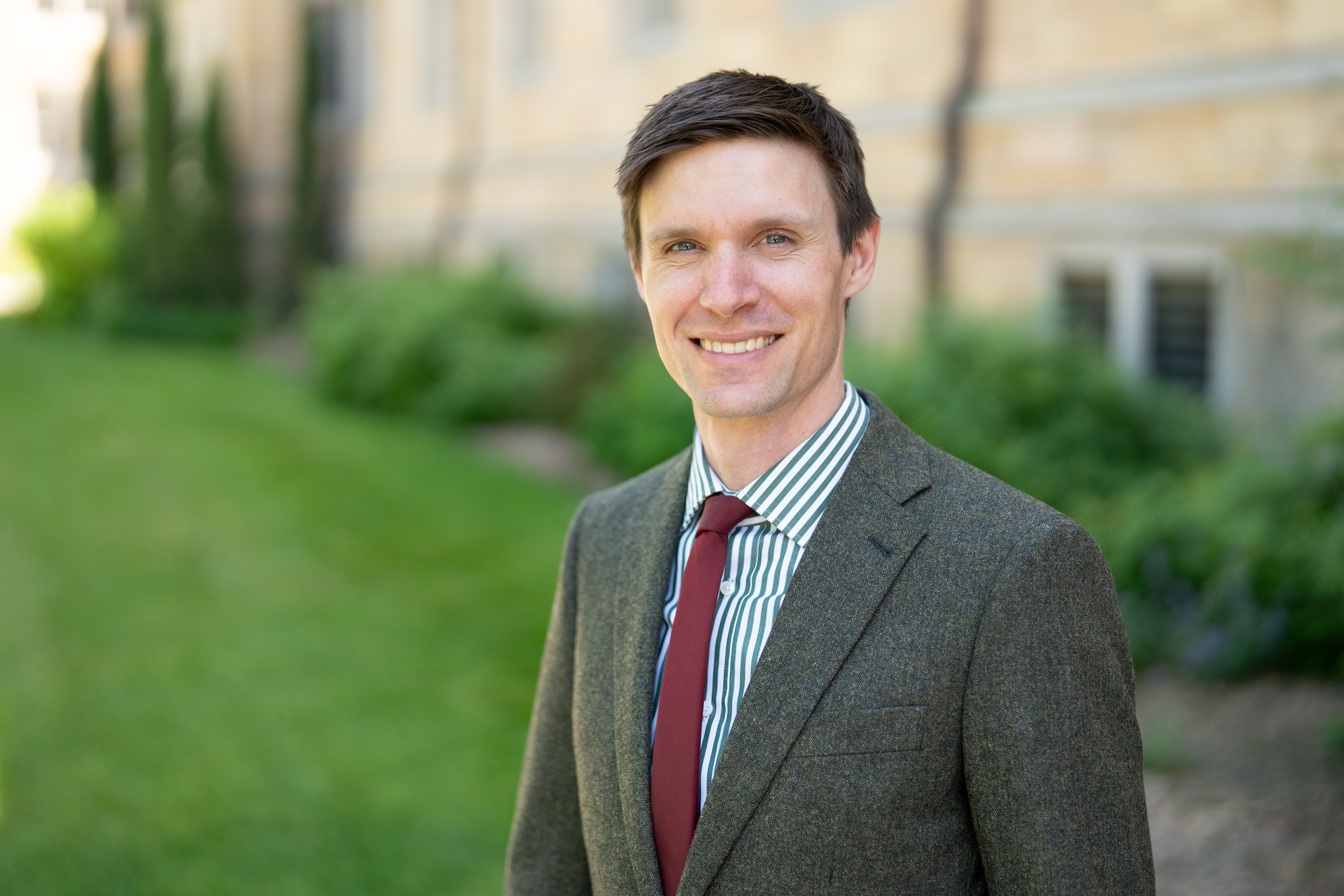
Tyler Schipper, an associate professor of economics at the University of St. Thomas, spoke with multiple media outlets about rising gas prices and ongoing inflation concerns as global tensions impact the economy. Schipper pointed to factors such as tariffs and conflict in the Middle East as key drivers influencing inflation and Federal Reserve decision-making, noting that even short-term disruptions can have longer lasting ripple effects on costs for consumers.

From “Good Morning America”:
“Pretty much everything you buy off a shelf is delivered by a truck that uses diesel,” Tyler Schipper, a professor of economics at the University of St. Thomas, told ABC News. “It’s the mechanism that takes an energy crisis in the Middle East and feeds it into other prices.” ...
The price effects will likely show up first in fresh fruits and vegetables, since their short shelf life leaves them especially vulnerable to sudden increases in supply-chain costs, Schipper said. Other perishable products like grains and meats could also prove price sensitive, he added. ...
“To the extent that upstream inflation is coming to consumers down the line, it’s hard to separate the upstream inflation pressure already there from the pressure that’s coming from oil-price increases,” Schipper said.
Still, the convergence of budget-busting forces is unlikely to bring the rate of inflation anywhere near its peak of more than 9% in the summer of 2022, Schipper added.
From WCCO-TV:

From KARE 11:
Tyler Schipper, an economist and professor at the University of St. Thomas, said global factors are playing a major role in shaping inflation and the Fed’s decision-making.
“The biggest factors are going to be tariffs, and tariffs getting passed on to consumers, and then the war in Iran,” Schipper said. “If I were to highlight the two biggest things putting higher inflation at the forefront at the Federal Reserve’s decision-making, those have to be the two things.”
Schipper also pointed to the Fed’s outlook on inflation. “One of the things that I was most interested in was what they thought was going to happen to inflation for the rest of the year, and their projection for inflation is actually higher than it was before,” he said.

From WCCO-TV:
University of St. Thomas economist Tyler Schipper says, amid the war in Iran, oil prices are up for two major reasons.
“The duration has gotten longer with an unknown end date and lots of attacks on oil infrastructure. The traffic jam, known as the Strait of Hormuz, is only getting worse. This is becoming a real issue, both for oil, but also natural gas and products that come from oil, like fertilizer,” Schipper said.
He says the current numbers may be the best we will see for a while.
“Certainly, my baseline is we will continue to see gas prices go up, even if the war ended today. Then over the next few days, they could start to stabilize and come down,” Schipper said.
Schipper added that one bright point is there will likely not be a gas shortage in the U.S. like in the ’70s because the U.S. has a better local oil supply.