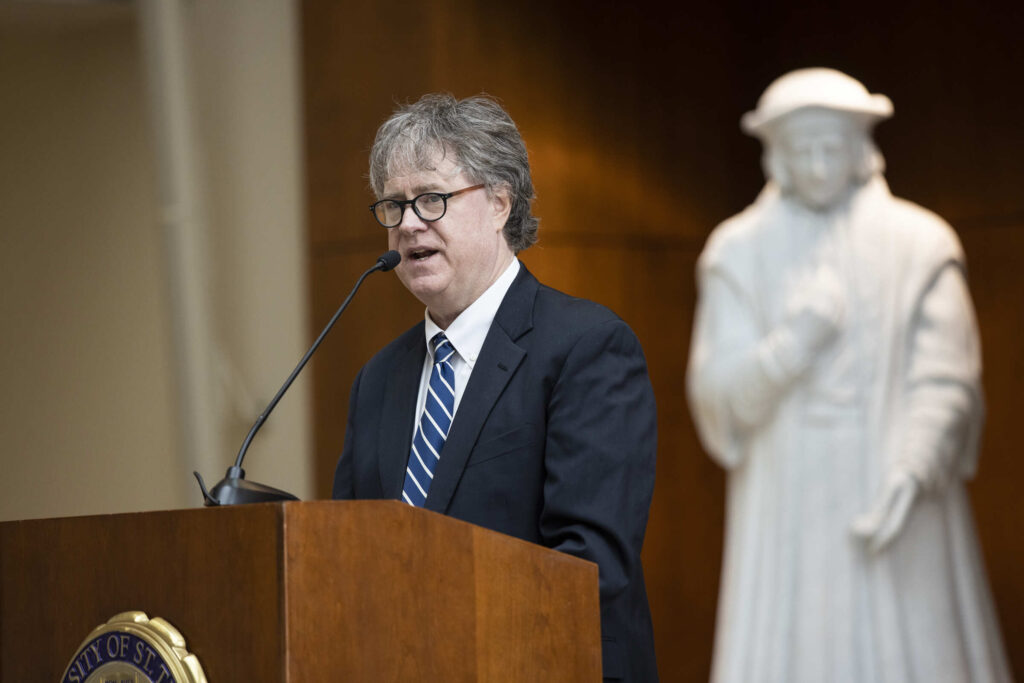
Tyler Schipper, an associate professor of economics and data analytics at the University of St. Thomas, spoke with KSTP about a shift in Minnesota’s labor market as the state’s unemployment rate moves above the national average for the first time in nearly two decades.

From the article:
Minnesota’s unemployment rate was 4.4% in January, compared with the national rate of 4.3%. University of St. Thomas Associate Professor of Economics and Data Analytics Tyler Schipper said that the rate is still not considered high, but it is relatively high for Minnesota, which has seen rates closer to 2% in recent years.
“2022 and 2023, Minnesota had one of the tightest labor markets in the country,” said Schipper. “So, it’s been in those last couple of years since that we just haven’t created as many jobs as the rest of the country.”
The state did not move above the national average until January. The timing, the hospitality industry being hit hardest, and the unusually concentrated rise in unemployment in the metro led North Star Policy Action to blame Operation Metro Surge for “real, measurable damage to Minnesota workers and businesses” in a report presented to state lawmakers this week.
Schipper said, as the report acknowledged, that it is not the only factor, but he said it is significant. He also said the last time Minnesota surpassed the national unemployment rate, a recession followed within a year.
“In most of the past recessions, this has been something that we’ve seen where Minnesota’s unemployment rate is higher than the national average right before that recession happens,” said Schipper.
“And so, I don’t think a recession is a foregone conclusion, but the odds are certainly rising.”