Under the leadership of Dr. Amy F. Smith, dean of the School of Education at the University of St. Thomas, the school is deepening community partnerships, strengthening educator preparation, and rethinking how K-12 schools can be designed to better support both teachers and students.
Smith looks to one question posed by the Next Education Workforce at Arizona State University: “What if teachers loved their jobs and students loved how they were learning?”
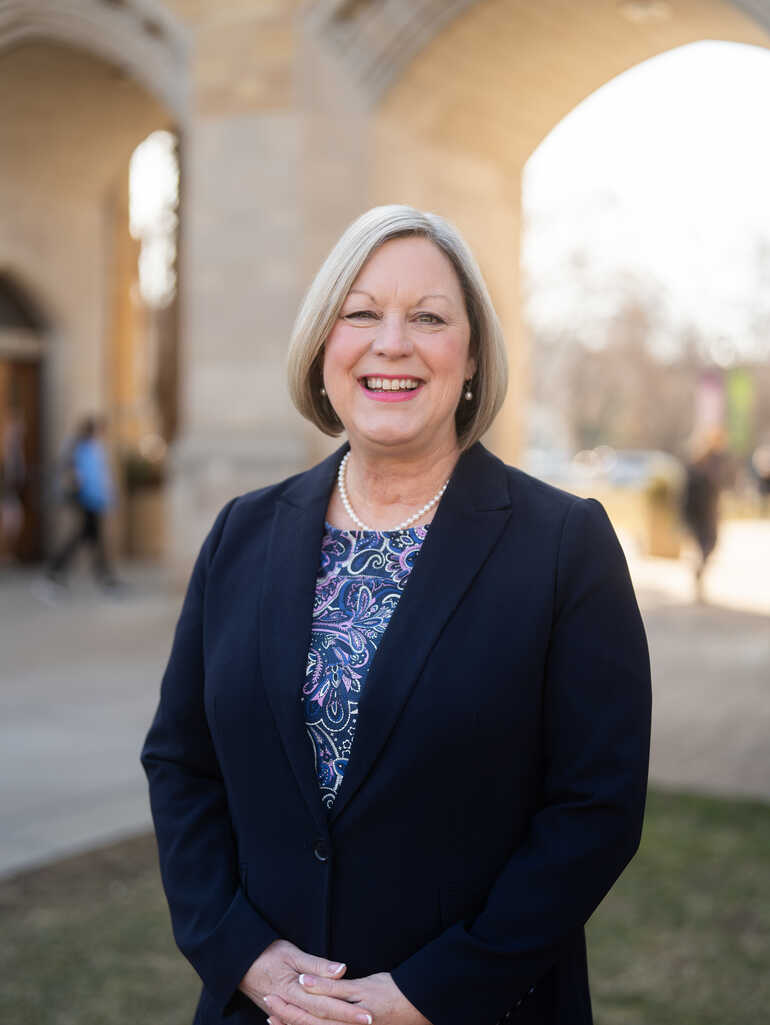
Smith, who became dean in 2024 and served in an interim role after more than two decades on faculty, says, “If we treat that question not as a slogan, but as a design brief, it changes how we think about preparation, partnership and impact.”
It also led her to ask her own question: “What would schools look like if they were intentionally built for teacher flourishing and student joy?
That design-focused approach is shaping how the School of Education works with local schools, prepares future teachers through community-based experiences, and supports educators already in the classroom.
As the school marks 75 years since its first graduate students crossed the commencement stage, Smith reflects in a Q&A on where the School of Education has been, where it is now, and how intentional collaboration will define what comes next.
Q: What does that 75th anniversary milestone mean to you as you look at where the school is today?
Smith: It’s both a moment of pride and a moment of responsibility. For more than 75 years, St. Thomas has been preparing educators who serve students, families, and communities across Minnesota and beyond. That legacy matters. But anniversaries are also a chance to ask whether our work is aligned with the realities educators face today and whether we’re designing preparation for the future, not the past.
Educators today are navigating academic expectations, student mental health needs, family engagement, technology, and persistent inequities all at once. What hasn’t changed is the essential role teachers play in shaping opportunity and success, and the responsibility higher ed shares in those outcomes.
Q: What do you see as the core issues behind many of today’s challenges in education?
Smith: For decades, schooling has relied on one teacher working largely alone within a classroom. That model often masks isolation and unsustainable workloads.
The challenges we’re seeing today don’t reflect a lack of commitment or talent among educators. They reflect systems that were never designed to support collaboration, shared responsibility, or differentiated expertise. When we treat teaching as solo work, we make it much harder for educators to sustain themselves over time.
Q: What does a better system look like?
Smith: Strategic team-based staffing offers a promising path forward. In this model, teams of educators with differentiated roles share responsibility for student learning. Instead of isolated classrooms, you have collective accountability.
This allows schools to distribute expertise, create leadership pathways, and provide more targeted support for students. So, if we ask what schools would look like if they were designed for teacher flourishing and student joy, teachers would no longer be expected to do everything alone. That transforms both the experience of teaching and the experience of learning.
Q: Where does St. Thomas and higher education in general fit into this redesign of schools?
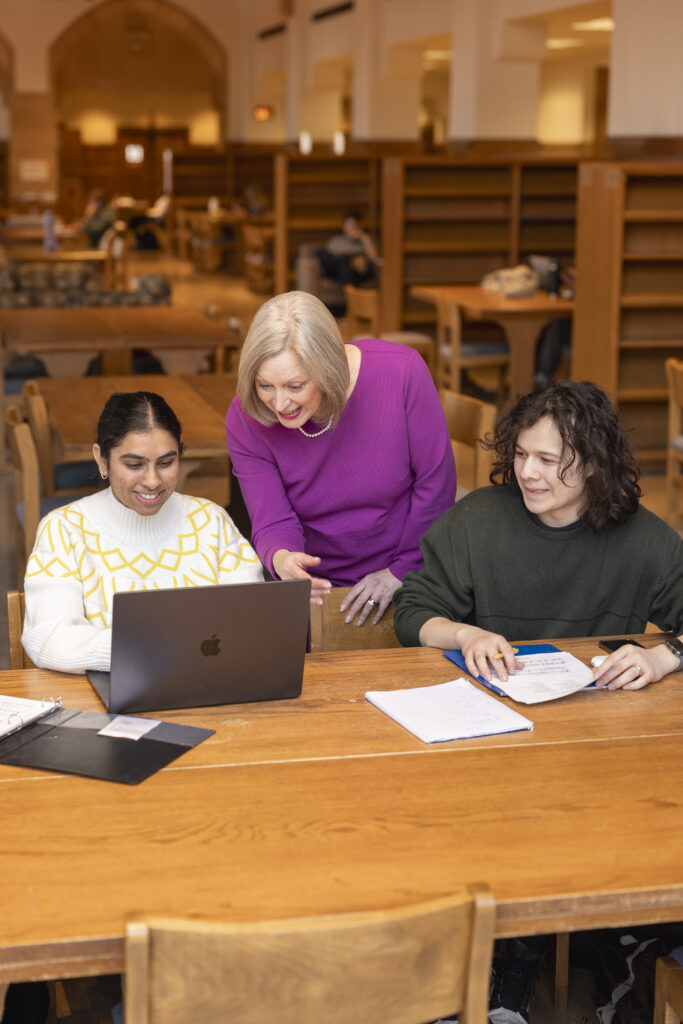
Smith: Team-based staffing can’t succeed if teacher preparation remains disconnected from how schools actually function; teacher candidates need to be integrated into the instructional work of schools themselves.
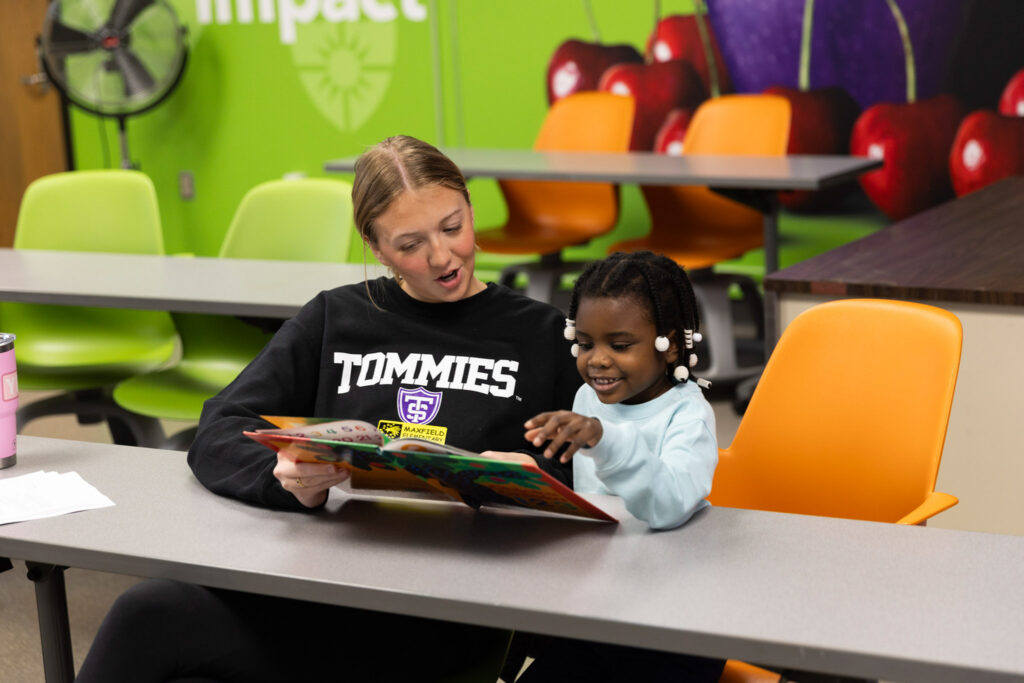
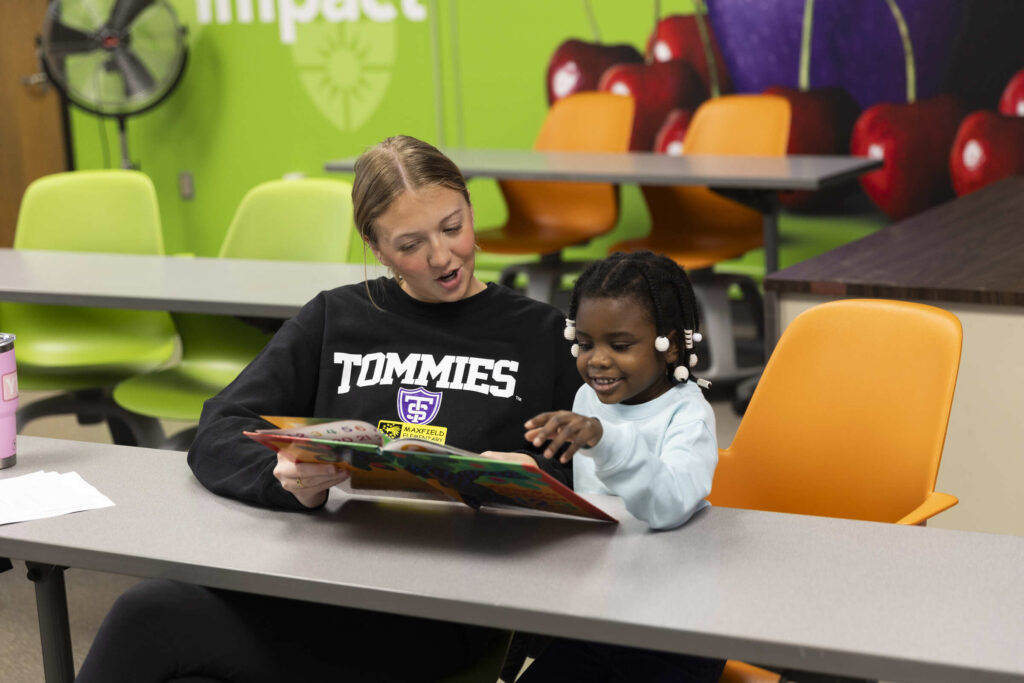
Our School of Education is deepening its work as an active partner with area schools, contributing research expertise, professional learning, and preparation pathways. With our partnership with Maxfield Elementary Collaborative Learning School and through our work with St. Peter Claver Catholic School, our university faculty work alongside teachers as coaches and collaborators. Teacher candidates learn within teams, not in isolation. Preparation, professional learning, and applied research are intentionally braided together.
These partnerships aren’t add-ons; they’re central to how we prepare educators. Schools gain instructional capacity and access to evidence-based practices. Teachers gain leadership opportunities that allow them to grow without leaving the classroom. And teacher candidates enter the profession already fluent in collaboration.
Q: Funding plays a critical role in sustaining this work. How has recent investment helped move these partnerships forward?
Smith: Strategic investment allows us to deepen what’s working and expand access. For example, St. Thomas recently received $1.1 million in funding to support the preparation of diverse K-12 STEM teachers. That investment strengthens partnerships with local schools while expanding pathways for students from underrepresented backgrounds to enter the teaching profession.
Similarly, philanthropic support, such as $2.3 million to the School of Education from a $12.3M gift to the university from the Sauer family, helps us increase instructional capacity, offer more robust field experiences, and connect preparation directly to community-identified needs.
Q: How do community-based programs fit into the School of Education’s approach?
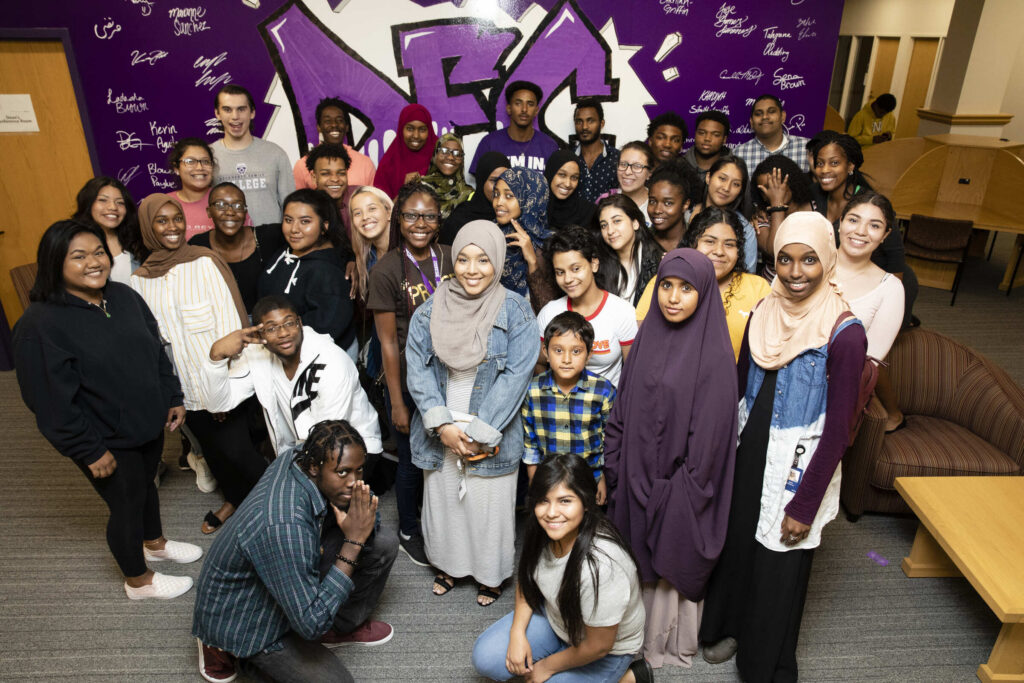
Smith: Programs like Summer to the Max are a powerful example of how community partnership, student learning, and educator preparation come together. The program serves elementary students, many who are from the Rondo neighborhood, through summer learning experiences. It’s applied learning. Plus, teacher candidates experience how community context shapes learning and how strong partnerships expand opportunities for students.
Q: How does this kind of applied experience shape St. Thomas education majors differently?
Smith: It helps candidates understand teaching as relational, collaborative work rooted in community. They learn to analyze student data collectively, reflect on practice with peers and mentors, and adapt instruction based on real student needs.
By the time they enter the profession, they’ve already experienced teaching as team-based work. That preparation matters, not just for instructional quality but for long-term sustainability in the profession.
Q: Supporting teachers already in the field is also part of your mission. How does that show up at St. Thomas?
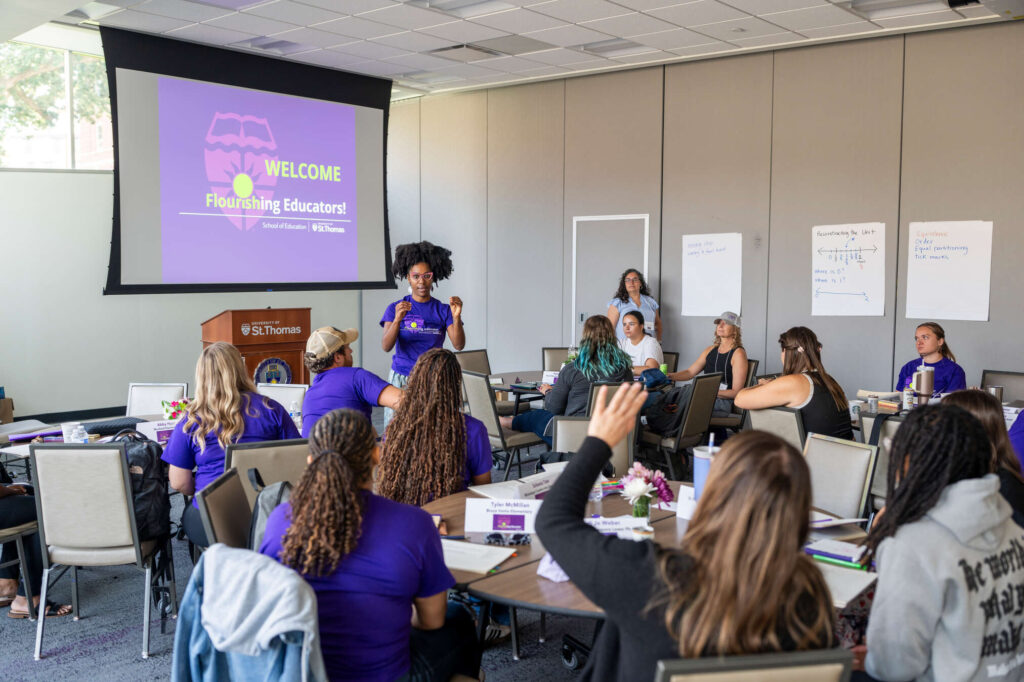
Smith: Teacher retention is often framed as a pipeline or resilience issue, but we know that people stay in professions where they feel supported, valued, and able to grow. Our programs like Flourish reflect that belief, supporting early-career teachers through restorative retreats, cohort learning, and yearlong coaching. We’re creating spaces where teachers can strengthen their practice, attend to their well-being, and build leadership skills without leaving the profession.
Q: What early outcomes are you seeing from these approaches?
Smith: In our partnership schools, we’re seeing encouraging indicators, such as improved attendance, stronger student engagement, and more consistent instructional practices. These outcomes aren’t accidental. They’re the result of strong partnerships, applied research-based inquiry, and shared responsibility.
Q: As you look ahead, what does the next chapter for the School of Education look like?
Smith: Building on a shared vision supported by the university, collaborative instructional work, and early evidence of positive outcomes, we’re poised to explore how team-based staffing and integrated preparation can become part of everyday practice and not just pilot programs.
If we design schools where teachers can flourish, students will thrive. And if we build those schools together — through strategic teams, strong partnerships, and a shared commitment to learning — we can move from hopeful questions to meaningful action.