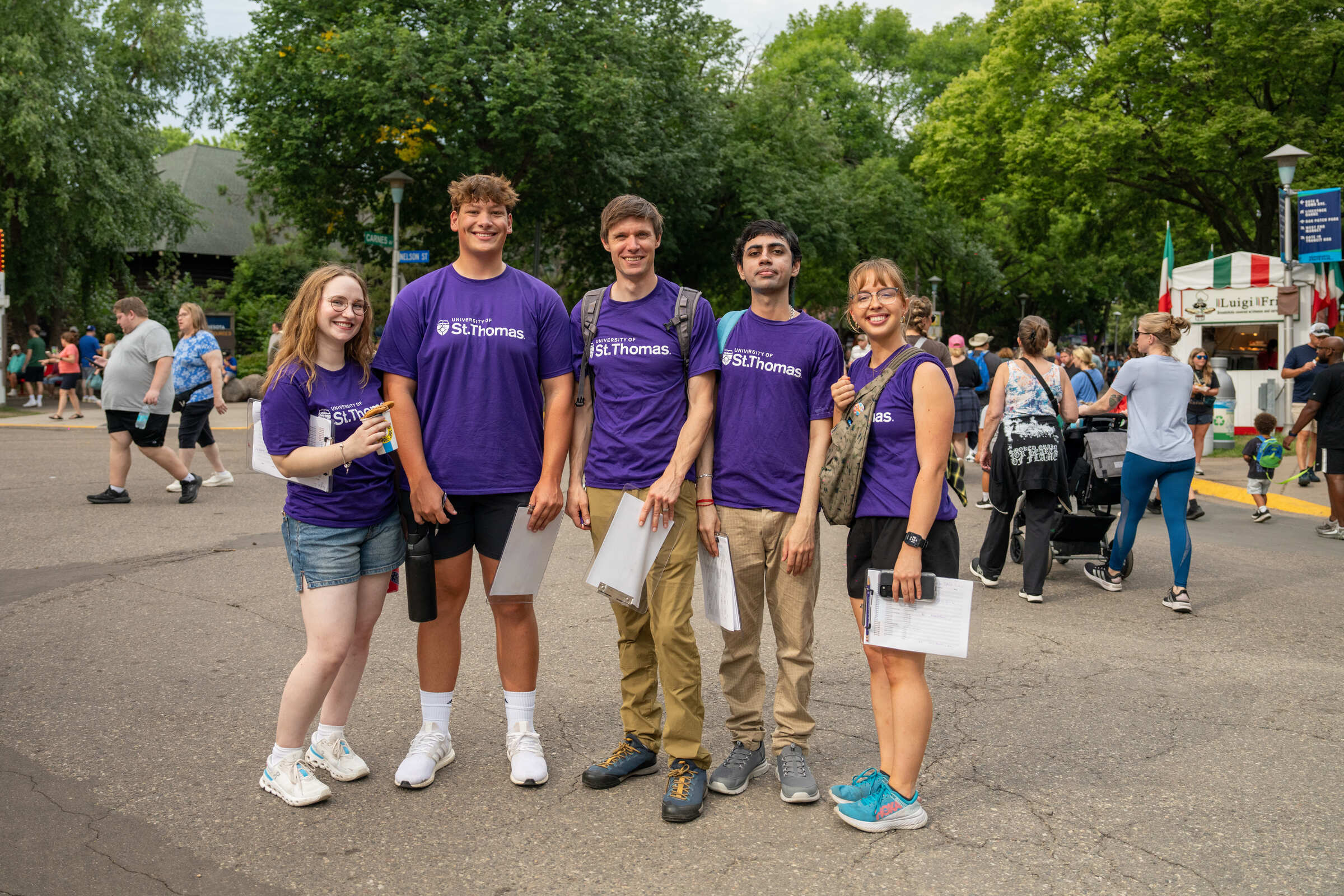
At the Great Minnesota Get-Together, it’s not just the food that’s fried; wallets are feeling the heat too. University of St. Thomas students created the first-ever “On a Stick Index” to track State Fair inflation. The inaugural project, modeled after the Consumer Price Index (CPI), revealed how much more Minnesota fairgoers are paying for iconic eats, beverages, rides, parking and even admission.
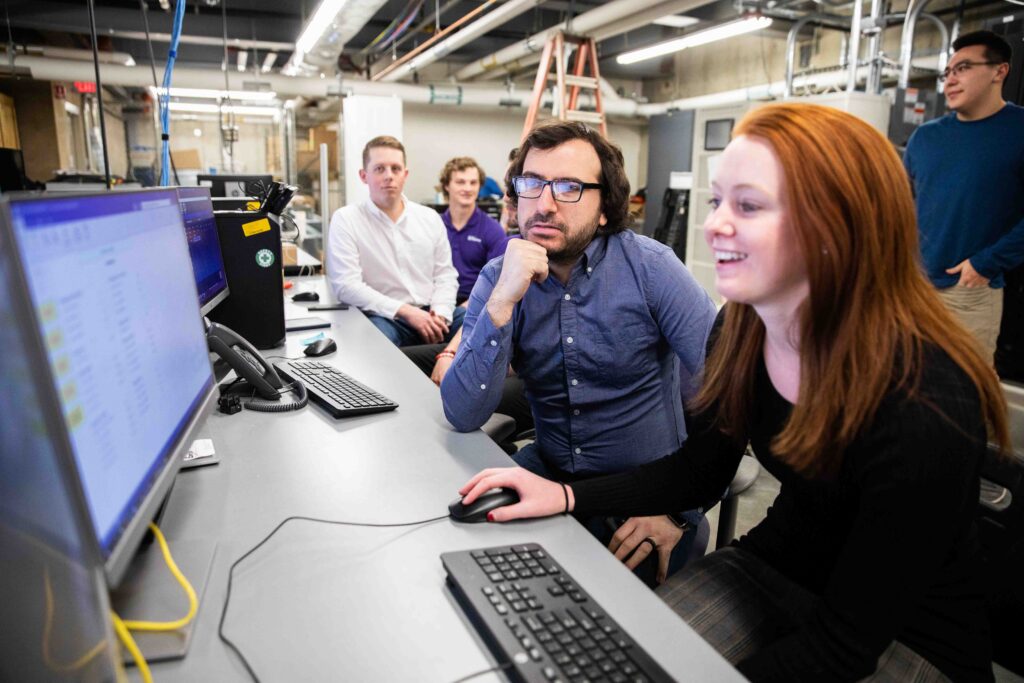
Early this summer, the team, led by Economics Associate Professor Tyler Schipper, conducted surveys of about 30 fairgoers to determine how attendees spend their money and identify items to include in the index. Undergraduate student researchers Kaylee Cantelon ’27, Jack Hartman ’28, Maddy Orr ’26, and Krishna Jayavardhan ’27, reached out to family, friends and St. Thomas community members, as well as worked with the Institutional Review Board to contact attendees from 2023 and 2024 so that they’d have a baseline to compare to 2025 prices. Prices have gone up year over year for the last two years they tracked.
Overall, prices at the Minnesota State Fair increased 7.7% year over year in 2025. From 2023 to 2024, the index showed an overall inflation of about 4.11%, with most increases coming from food and beverages. The popular Sweet Martha’s chocolate chip cookies rose just over 5%, from $19 to $20 per bucket, while all-you-can-drink milk jumped 50%, from $2 to $3.
“So, you might say milk and cookies drove inflation last year,” Schipper said. Since these items are popular among fairgoers, they had a large effect on the overall index, even though admission and ride prices remained the same.
Cantelon, a business economics major in the College of Arts and Sciences at St. Thomas, said the surveys were key to understanding spending patterns.
“As someone who has been to the State Fair maybe three times, I was not a good person to tell you what is iconic,” she said. “It’s really great to see that people go crazy over Sweet Martha’s cookies and the mouth-trap cheese curds.”
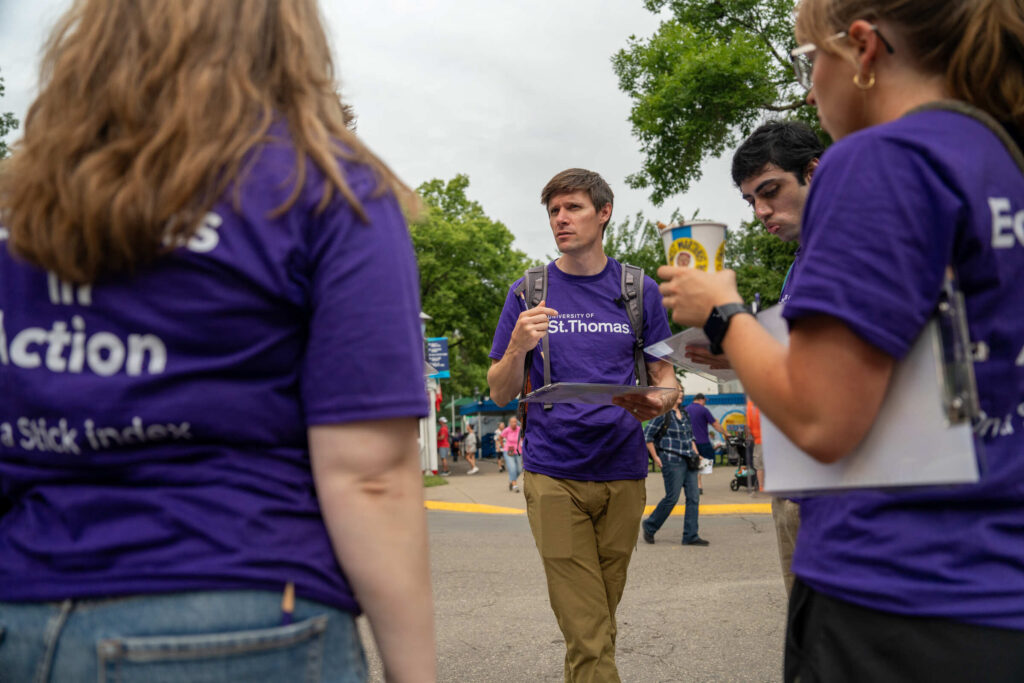
To determine what people paid, the students also researched prices using vendor contacts, Instagram photos, Blue Ribbon Bargain Books, and the Wayback Machine. Cantelon said images on social media were particularly useful for filling in missing data.
“A lot of my data came from photos on Instagram and TikTok,” Cantelon said. “People would take pictures of menus or pose in front of vendors, and I could zoom in to check the prices.”
Some items required estimation. For example, only a 6-inch corn dog price was available from 2023. The team used the 6-inch to 12-inch price difference from 2024 to estimate the 12-inch cost in 2023. Schipper said this process connected students with how the U.S. Bureau of Labor Statistics (BLS) handles missing data.
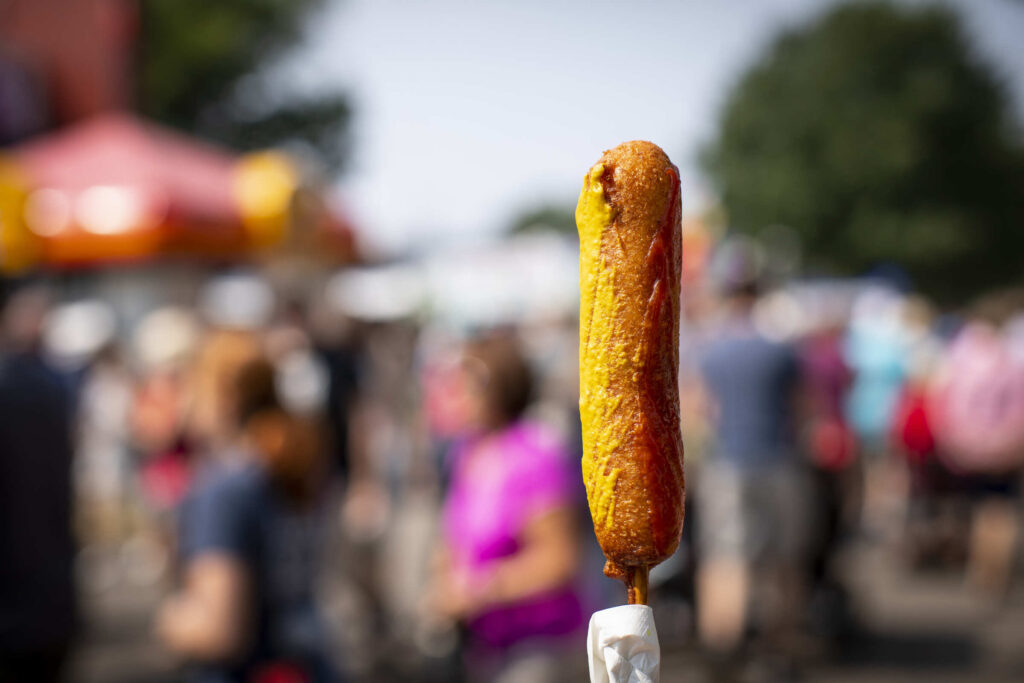
“I think it was a good teachable moment,” Schipper said. “Sometimes the data isn't there and this is something that the BLS is going through too, as they struggle with missing prices and staffing shortages.”
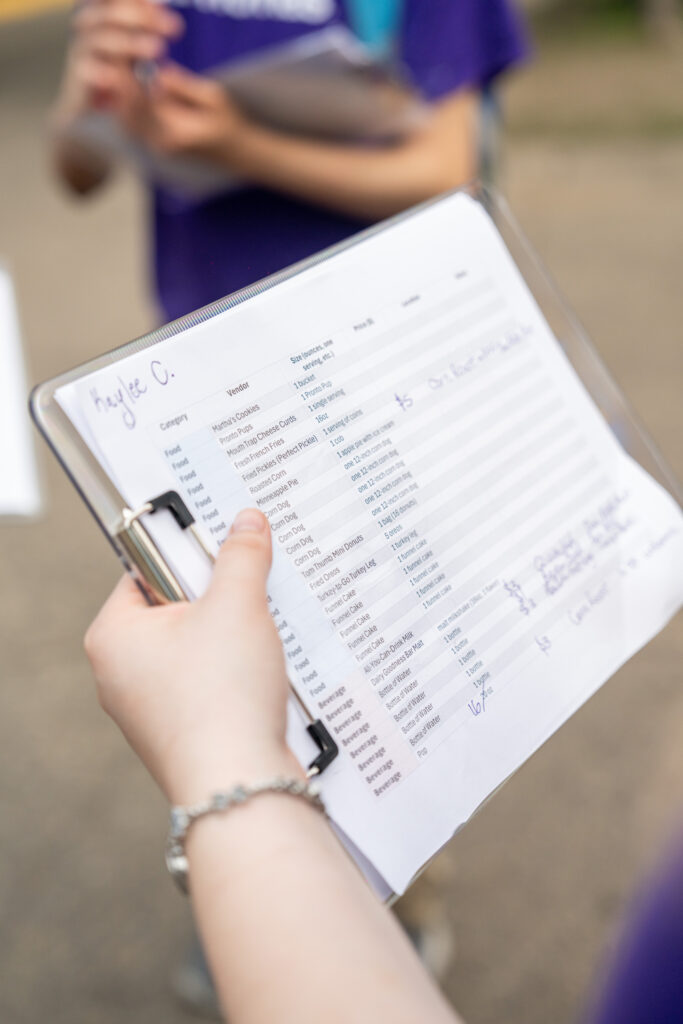
Schipper said he hopes one of the things students learn what goes into creating good data. “When we scale this up to a macro level, you can imagine all the complications and the time that it takes,” he said. “Although it's kind of a fun index, it's also serious in that people face cost pressures in the economy today and they’re always trying to make ends meet.”
Cantelon also noted that on-site parking costs jumped from $20 last year to $25 in 2025.
“When I was doing surveys with people, one thing I noticed was how much people focused on paying for parking, specifically that they wouldn’t do it,” she said, adding that it will be interesting to see whether higher parking fees drive more visitors to offsite lots or shuttle services.
Working on the “On a Stick Index” gave Cantelon new insights into research, coding and statistical analysis using Stata.
“I’ve taken a couple of classes on economics at St. Thomas. I’m still pretty new in my major but I had a basic understanding of how the CPI worked. So, actually modeling it and doing the research, finding the numbers then calculating and looking at weights really gave me a better understanding of how price indexes work,” she said. “We had times where we couldn’t find the data we wanted. So, working around that and problem-solving were all skills that were definitely gained throughout this process.”