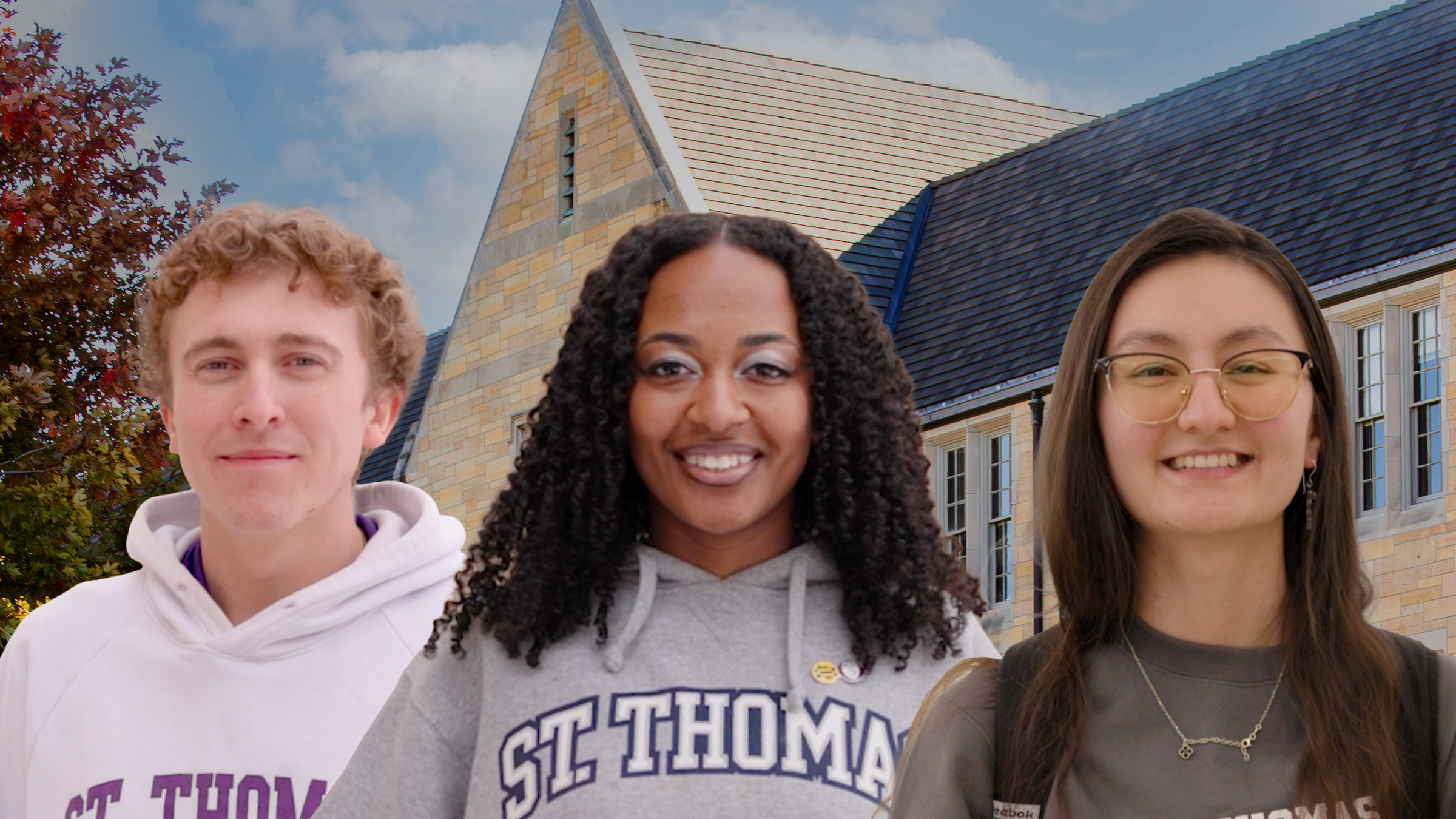
Gozel Rahymjanova achieved something few women do in the area where she grew up. She traveled more than 6,000 miles from her small village in Turkmenistan, a country bordering Iran and Afghanistan, to pursue a higher education in the United States.
“I don’t know anyone in the area I grew up in who studied in America; it’s especially (rare) for women to study abroad,” said Rahymjanova, a transfer student to the University of St. Thomas. “I was like a superhero for my siblings.”
As a local community college student before coming to St. Thomas, Rahymjanova served as student senate president and as a math peer mentor. She also earned a certified nursing assistant credential while pursuing two associate degrees.
With her father as the family's sole provider, financing the transfer to Minnesota’s largest private university presented a challenge. Then came an email telling her she had received a scholarship to St. Thomas.
“I literally cried from joy and gratitude because it’s like something impossible becoming possible in my life,” she said.
Today, Rahymjanova is studying nursing at the Morrison Family College of Health’s Susan S. Morrison School of Nursing. She was inspired in part by the limited access to medical care she witnessed growing up.
Her journey illustrates why scholarships are the top priority of “Be Brilliant. Be Bold. The Campaign for St. Thomas.” The university’s comprehensive campaign, which publicly launched in September, aims to raise a record $1 billion across everyday givers and longstanding philanthropists.
Across Minnesota’s private nonprofit colleges, institutional aid accounts for more than two-thirds of the financial aid students receive, according to the Minnesota Office of Higher Education.
At St. Thomas, 97% of undergraduates receive scholarships or other financial aid, yet more than 35% still have significant financial need after that assistance. In fiscal year 2025 alone, donor support provided 3,658 scholarships through annual gifts and donor-funded endowments.
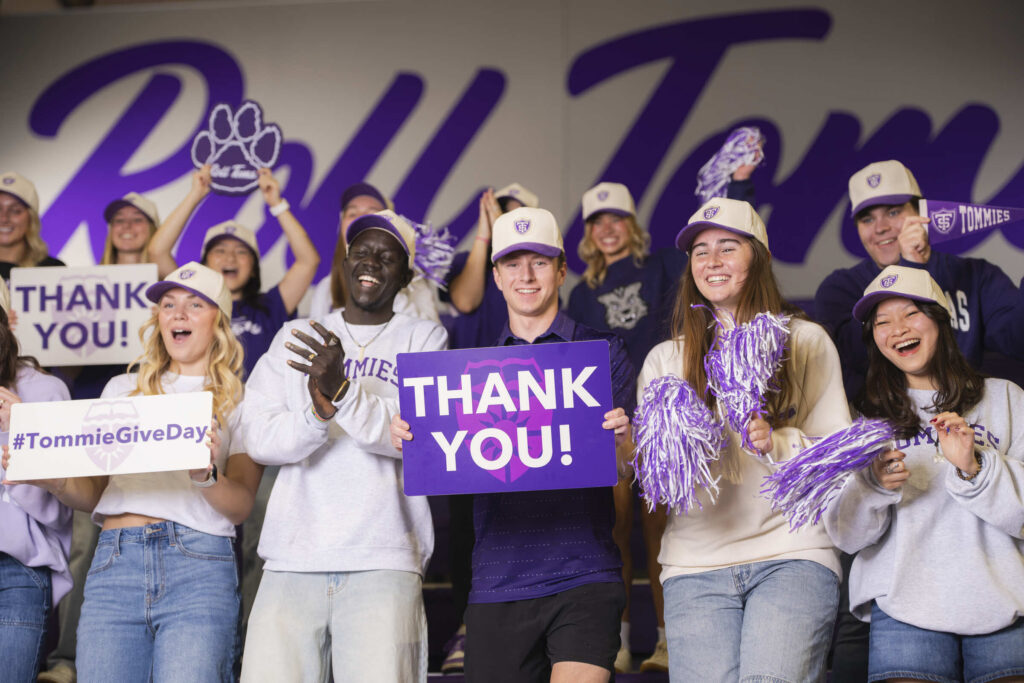
Financial support can determine more than whether a student enrolls. It also can influence what students are able to do once they arrive, from the relationships they build, the organizations they join and the experiences that help them discover where their education might lead.
Those connections run through the campaign’s three priorities: scholarships, faculty and academic excellence, and student experience. They each represent a different kind of philanthropic investment.
Opening the door
Ann Winblad ’75, an alumna who is on the Board of Trustees, knows firsthand what it means to piece together the resources needed for college.
Scholarships, loans and steady work helped finance her St. Thomas education. Her father, Wilbur, was a teacher and basketball coach who took on extra jobs while three of his six children attended college at the same time. Her mother, Elizabeth, was a nurse.
More than 25 years ago, Winblad established the Wilbur and Elizabeth Winblad Endowed Scholarship in their honor.
“It has been even more gratifying to be in a position to pay it forward,” said Ann Winblad. “Most students need financial aid. And most of them can only come here because of scholarships.”
Nearly 900 students have since received support from her endowed scholarship, with particular attention to middle-income families who may not qualify for significant need-based assistance but still struggle to afford four years of college.
For today’s students, reducing financial pressure can create something else of value: time.
Engineering student Lucas Meyer said scholarship support allows him to devote more attention to a rigorous academic program rather than spending additional hours earning money. He works on campus in the engineering tool crib, participates in student organizations and helps other engineering students.
Scholarship support gives Meyer more time for the demands of his engineering studies and opportunities to help his peers.
“I really try and honor it by helping other students when they need help, pushing them, teaching them what I've learned,” he said.
A path into the profession
Sometimes removing a financial barrier can change not only a student’s college experience but also the path into a profession.
Quantell Crawford ’20, ’23 MA faced the prospect of quitting his job to complete unpaid student teaching or abandoning his plans to become a teacher. The St. Paul Urban Teacher Residency offered another path.
Over 15 months, residents combine graduate coursework with more than 1,200 hours of paid classroom experience alongside experienced mentors. Crawford was able to earn while learning, eventually becoming a special education teacher at Hazel Park Preparatory Academy in St. Paul – the same school where he completed his residency.
“The residency changed everything,” Crawford said. “I was learning and earning at the same time, getting to know my school, my students and my colleagues.”
Since 2016, St. Thomas teacher residency programs have helped prepare and license more than 435 educators. Philanthropic support has helped fund resident salaries, mentorship and tuition assistance, while a gift from the I.A. O’Shaughnessy Foundation is supporting a new undergraduate residency program.
It is one example of what experiential education can look like at St. Thomas: students applying what they learn while developing the relationships and skills that prepare them for what comes next.
Learning by doing
Richard M. “Dick” Schulze has spent decades championing that idea.
The Best Buy founder and chairman emeritus made the founding gift for the Schulze School of Entrepreneurship in 2000. Today, entrepreneurial education reaches well beyond students planning to start businesses. Fifty-one percent of the Class of 2026 took at least one entrepreneurship course. The Schulze School also climbed eight spots from 2024 to rank No. 11 internationally in 2026, placing it among the top 10 in the United States.
Schulze believes some lessons can’t simply be taught.
“When you actually experience something, you remember it,” he said. “It’s the doing or the experience that essentially sticks with you.”
That can mean developing an idea, entering a competition, conducting research, working alongside a professor or discovering through failure that a different approach is needed.
Jaden Caldwell, now a sophomore entrepreneurship and real estate double major from north Minneapolis, said scholarship support made it possible for him to choose St. Thomas rather than immediately enter the workforce or attend a less expensive college.
What he found here extends beyond his classes. Caldwell points to meeting people, building a network and finding community and belonging.
“Without this scholarship, I really would’ve had to face two choices, either just going straight into the workforce, or it would’ve really just been something more affordable, community college,” Caldwell said. He also pointed to what he might have missed: “that level of community and space or sense of belonging here at St. Thomas.”
More than tuition
Caldwell's scholarship is also part of a broader investment in his development. As a Ciresi Walburn Leadership Fellow, he moves through his undergraduate years with a cohort of students who receive mentoring, professional and leadership development, internships and opportunities to serve others.
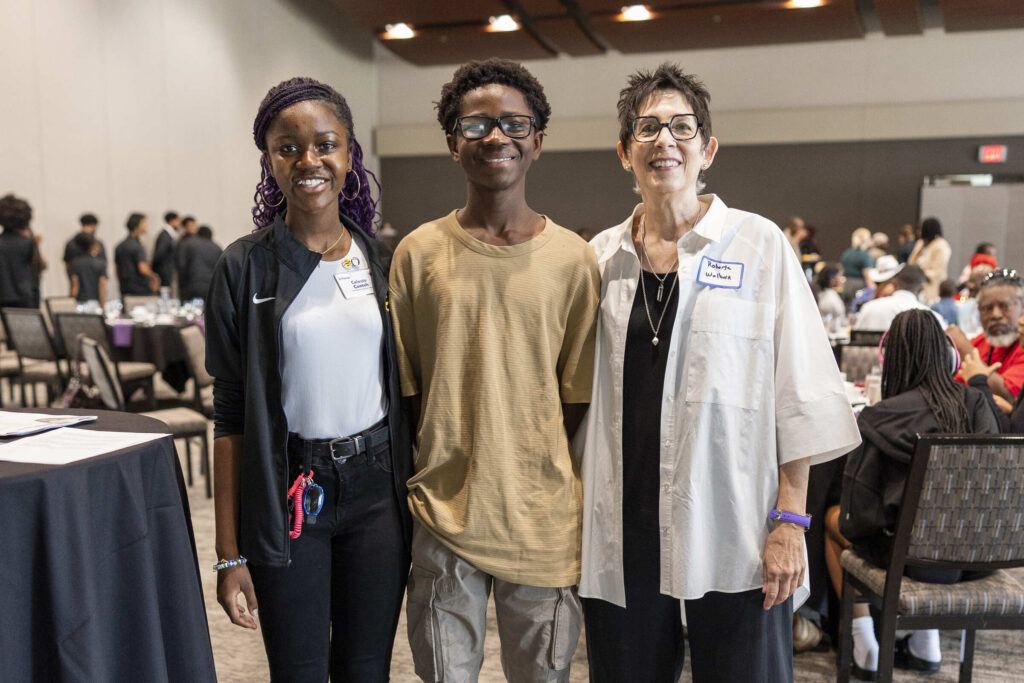
Through a monthly speaker series, fellows engage with Twin Cities leaders on topics ranging from leadership and perseverance to community service. One session featured former St. Paul Mayor Melvin Carter in a discussion about his leadership journey, building trust and working collaboratively.
The CWLF program was established by Mike Ciresi ’68 and Roberta Walburn, whose foundations recently committed a record $82 million to St. Thomas to expand the fellowship program and establish centers for leadership and first-generation college students. The first four-year cohort graduated in spring 2026, having shared not only financial support but also the relationships and experiences designed to prepare them for life after St. Thomas.
Walburn sees that promise in the fellows themselves.
“Just to look at these students and see their dreams and their promise,” she said, “gives you more hope for what the world could be like.”