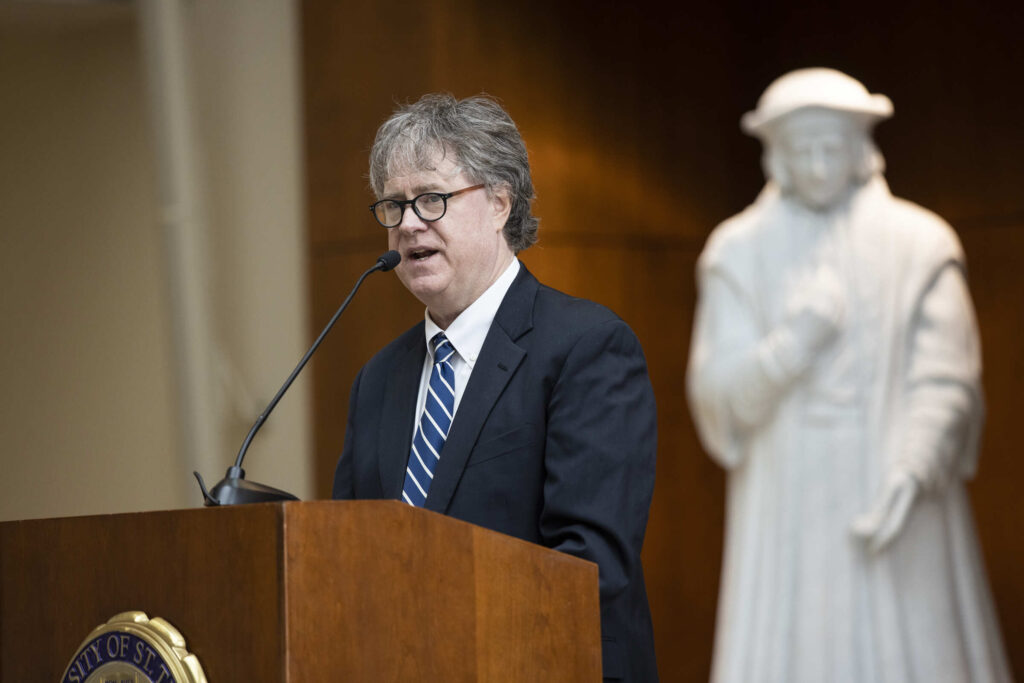
Seth Ketron, associate professor of marketing in the Opus College of Business at the University of St. Thomas, was quoted by The Associated Press in an article examining how some online ads use artificial intelligence and fabricated backstories to pose as family-run small businesses. Ketron explained that increasingly realistic AI-generated images and emotional narratives make it easier for consumers to overlook warning signs, cautioning shoppers to slow down, look for verifiable details and question offers that appear too polished or too good to be true.

From the article:
Melia & Co appears to be a small family-run business. The sweaters on its website feature a photo of a woman hand-knitting a Christmas design. The caption says that after decades of creating knitwear that tells “quiet stories of care and beauty,” she is closing her little studio and the pieces on offer are her last.
The website of Olivia Westwood Boutique also spotlights a charming backstory. The “About Us” section states that twin sisters run the shop their mother opened in 1972 and share her commitment to a business “rooted in family, community and women uplifting women.” Shoppers could take advantage of a sale honoring the boutique’s late founder on what would have been her 95th birthday.
But neither store is what it appears. ...
Some vendors and fraudsters have taken advantage of AI-generated images to create websites that have an aura of artisan authenticity or that point to a long history as a trusted small retailer, said Seth Ketron, a marketing professor at The University of St. Thomas in St. Paul, Minnesota.
“It’s getting more and more common,” Ketron said. “If you’re not careful or you’re really paying close attention, or you don’t really even know what to look for or what AI photos look like, it’s easy to kind of just gloss over or miss that it’s probably not real.”