Data is everywhere. Most people might picture a computer screen and a dense spreadsheet. Amelia McNamara goes beyond that, however. She partnered with the local Lumen Christi Catholic Community on a project that showed her students the real-world applications of data science.
The parish specifically wanted to map the mental health needs of its members so it could better assist them.
To assist, the students received an enormous bag filled with handwritten Post-It notes. They organized and translated the physical data in a way that helped the parish understand the needs of its community.

Teaching starts with people
For McNamara, the project underscored a lesson she emphasizes in her teaching: data doesn’t start in a spreadsheet; it starts with people.
“I think interdisciplinary perspectives are what’s valuable about a liberal arts education, like here at St. Thomas,” McNamara said.
“Taking philosophy, math, English and history, and becoming a well-rounded person, are going to be very valuable for students. We need to use our critical thinking skills to sort out what is true and what is not.
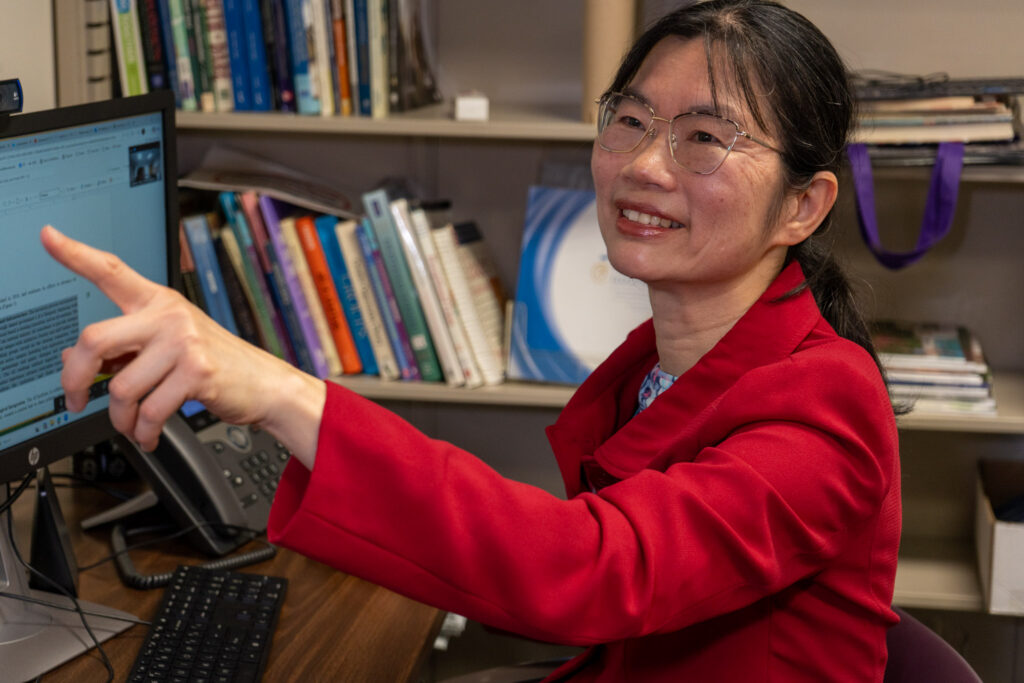
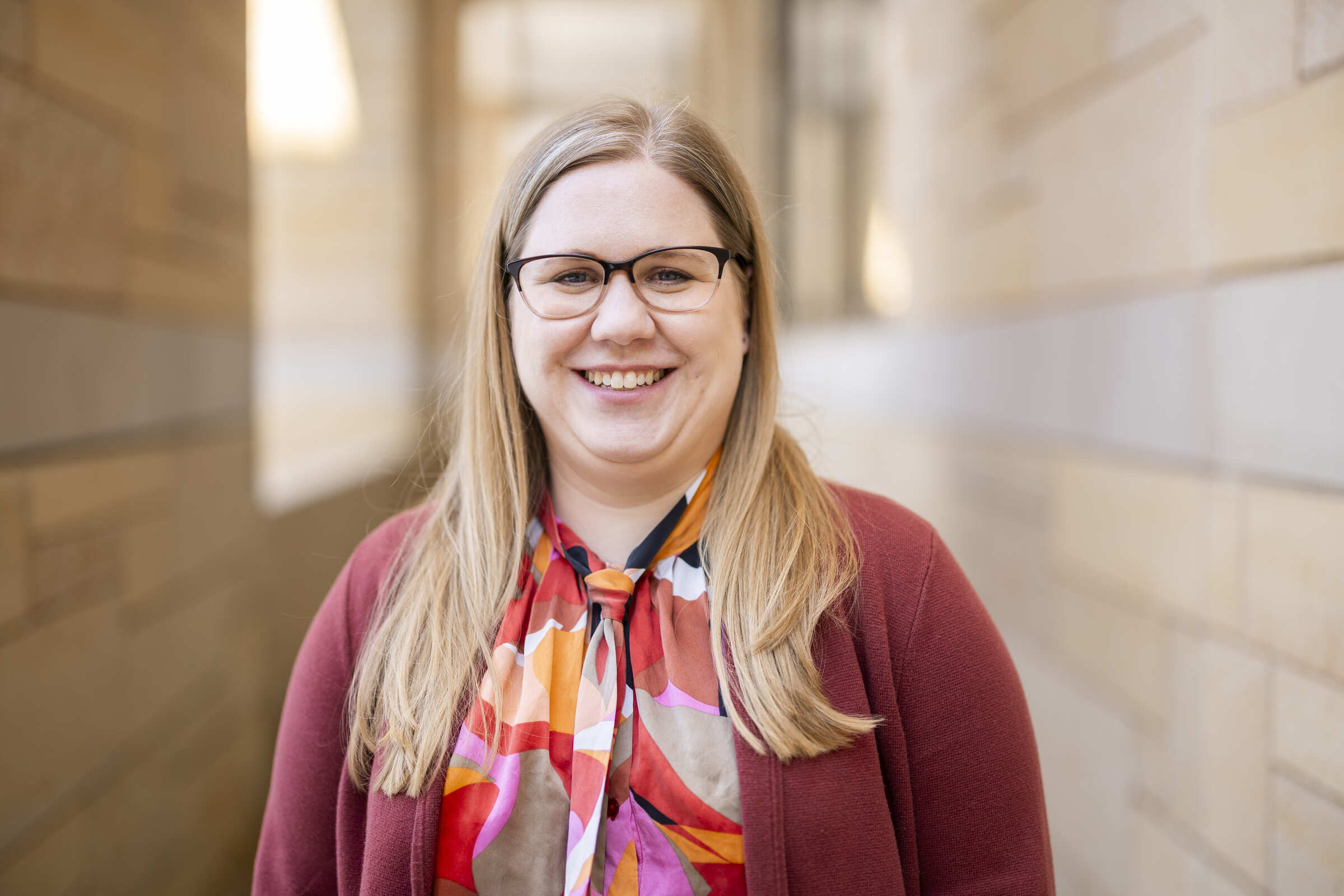
The associate professor of data science and statistics in the College of Arts and Sciences at the University of St. Thomas teaches students how to think critically about its human-centered impact.
“Thinking about data gives you a new way to think about the world,” she said. “Having data as one of the lenses with which you can view a problem, gives you a new perspective. I think that's valuable no matter what you're studying.”
Before McNamara earned a Ph.D. in statistics from UCLA, she studied both English and mathematics as an undergraduate living in Minnesota. At every level, her instructors inspired her to pursue teaching. She began teaching in 2015 and joined St. Thomas in 2018. Her courses range from statistical computing to data journalism and spatial statistics.
“I'm interested in everything,” she said. “If you are teaching data, you get to work with anything.”
Learning the Language of Data
In 2022, she was recognized by the American Statistical Association for excellence in teaching and ;statistics education, and led a “Teach-in-Tuesday" virtual seminar on algorithmic accountability.
While the topic itself sounds technical on the surface, the actual discussion focused on humanity. In the seminar, McNamara discussed how some companies’ use of artificial intelligence to select job candidates reinforced existing bias. That’s because some of these algorithms, such as one used by Amazon at the time, was trained on past hiring data at a time when most successful applicants were men, she said. (Amazon has since stopped using the algorithm).
“So, the algorithm chose to penalize applications with the word ‘women’ in them, such as women’s chess club or women’s rugby,” McNamara said. “And this led to a bias in the decisions the algorithm made.”
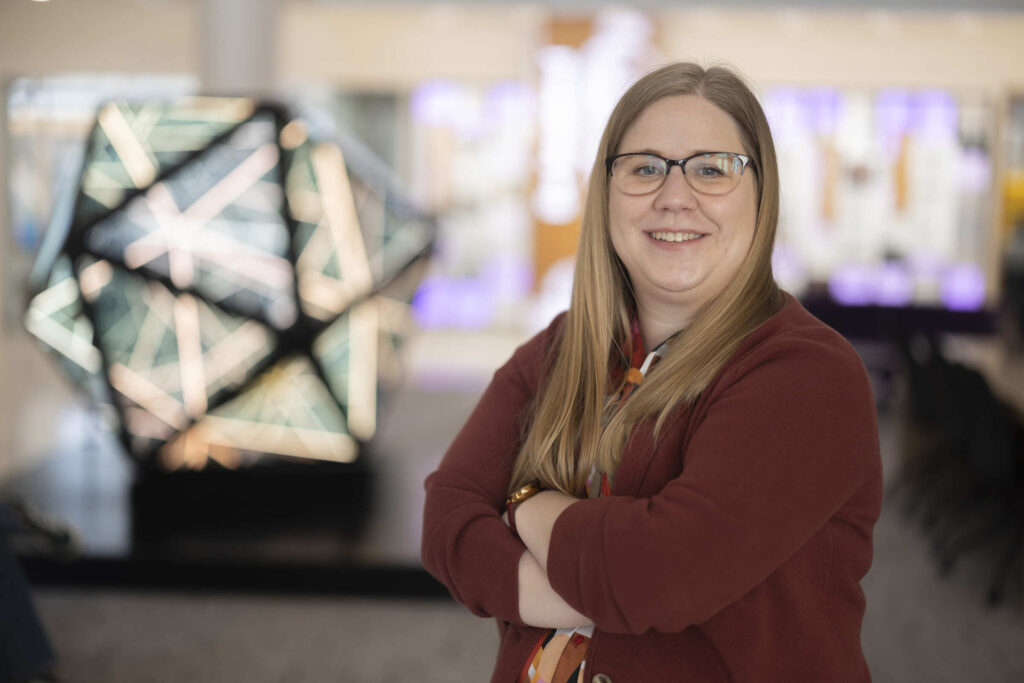
McNamara is great at showing real-world applications in her teaching, said Caitlyn Marsh '26, a senior who took McNamara’s data communication and visualization course in the College of Arts and Sciences.
“Her enthusiasm for data science is contagious,” Marsh said. “I loved taking her class and I hope to get the opportunity to have her as a professor again before I graduate.”
The Importance of Diversity in AI
Every human has biases that affect their understanding of data. McNamara is worried that artificial intelligence and automated systems are being developed by a narrow group of people who are not totally representative of real-world diversity.
“Automated data systems make a lot of decisions. Who goes to jail and who's let out on bail, who goes to prison and who gets parole, who is given a loan by the bank, who gets into college,” McNamara said. “If we don't have a representative group of folks in the room to notice unintended biases, the system might not be equitable. Then we're going to reinforce the biases of the past in the computer systems of the future.”
McNamara has simple advice for students as they navigate this reality: “Steer into your humanity. Reason, emotion, reflection is what sets us apart from machines.”
McNamara might be seen as somewhat of an AI skeptic, but she’s respected by colleagues who are bullish on the growing use of the technology.
Jonathan Keiser, associate vice president of academic technology and innovation at St. Thomas, is one such colleague. “Although we often approach artificial intelligence from different sides, I regularly seek Professor McNamara’s thoughts on it because I know she grounds her thinking in evidence and human-centric values.”