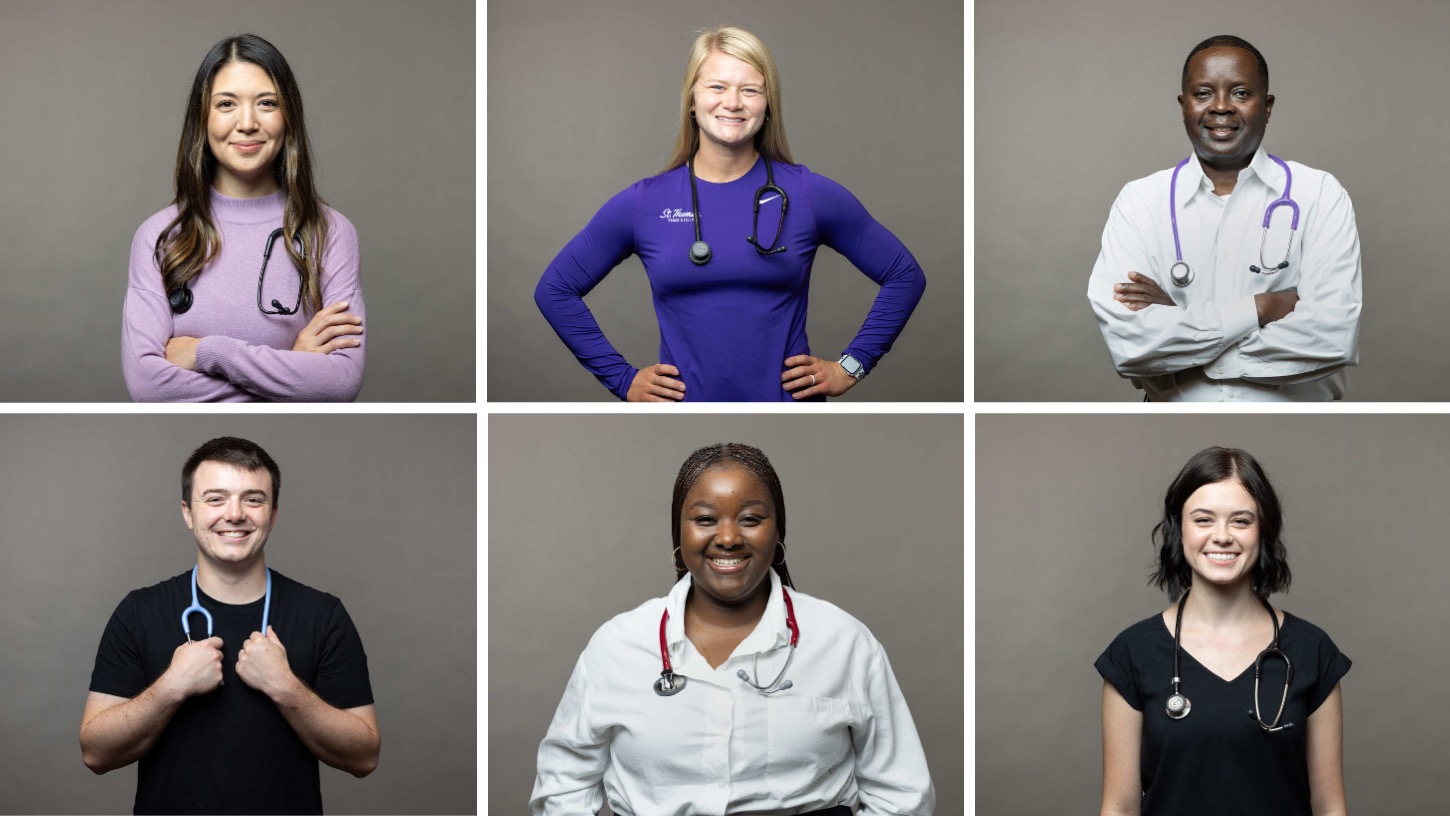
As a nurse practitioner who still works urgent care shifts while directing the Master of Science in Nursing program at the University of St. Thomas, Dr. Ashley Walker has seen firsthand who doesn’t get served by traditional daytime nursing programs: working adults, parents, career-changers and students already embedded in health care roles who can’t easily pause their lives to become nurses.
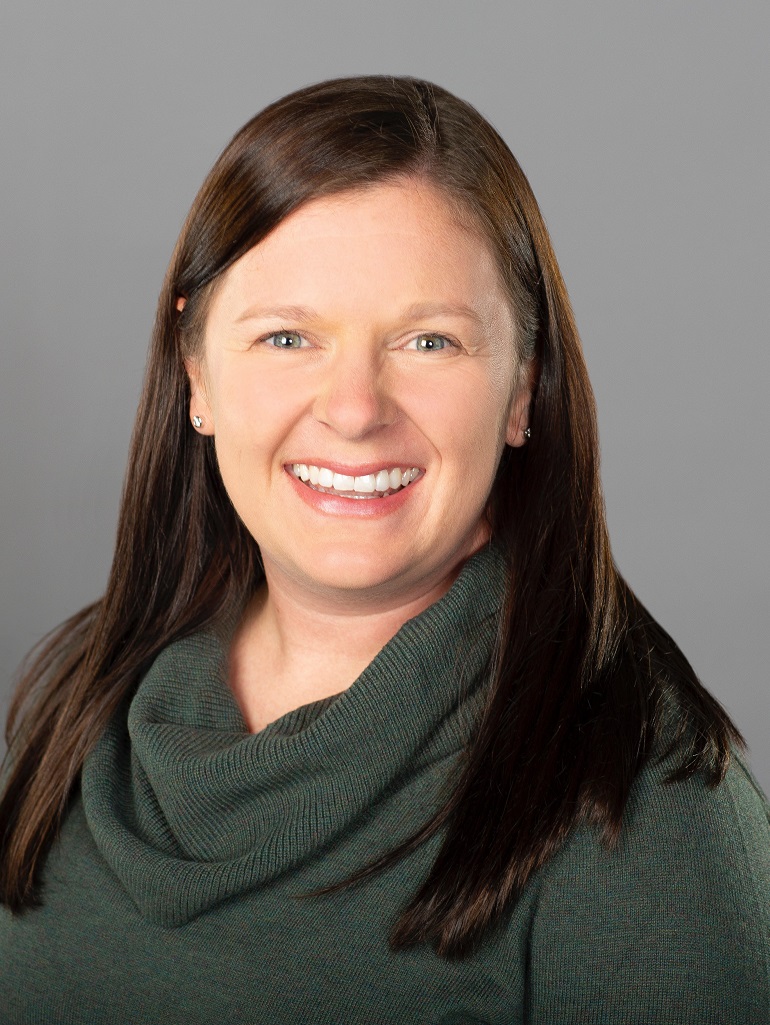
“The nursing profession needs people who reflect the real world,” Walker said. “That includes students who are balancing work, family and caregiving while preparing for an incredibly rigorous profession.”
But access can be a barrier for some.
Traditional accelerated nursing programs often assume students can attend daytime classes, limit work hours and move quickly through coursework by taking as many as 13 credits per semester. For many potential nurses, including those already working as CNAs, EMTs, or professionals in entirely different fields, that structure can be prohibitive.
That reality helped shape a new hybrid pathway within the Susan S. Morrison School of Nursing. The three-year Master of Science in Nursing option is designed for students who need flexibility without sacrificing academic rigor.
The new hybrid MSN pathway follows the same pre-licensure curriculum as the accelerated two-year program. The distinction is students take a blend of in-person and online evening courses, typically enrolling in six to seven credits at a time. This allows them to continue working while progressing toward licensure.
“We saw motivated, capable students who wanted to become nurses but couldn’t fit into a one-size-fits-all schedule,” Walker said. “Rather than asking them to change their lives, we asked how our program could change.”
Expanding who gets to become a nurse
As Minnesota and the nation are facing a persistent nursing shortage, driven by an aging population, increased health complexity, and burnout across the profession, health systems are seeking nurses who can think beyond acute care. They need professionals who understand prevention, equity, advocacy and the social factors that shape health outcomes.
And that is what makes the St. Thomas nursing program distinct from others.
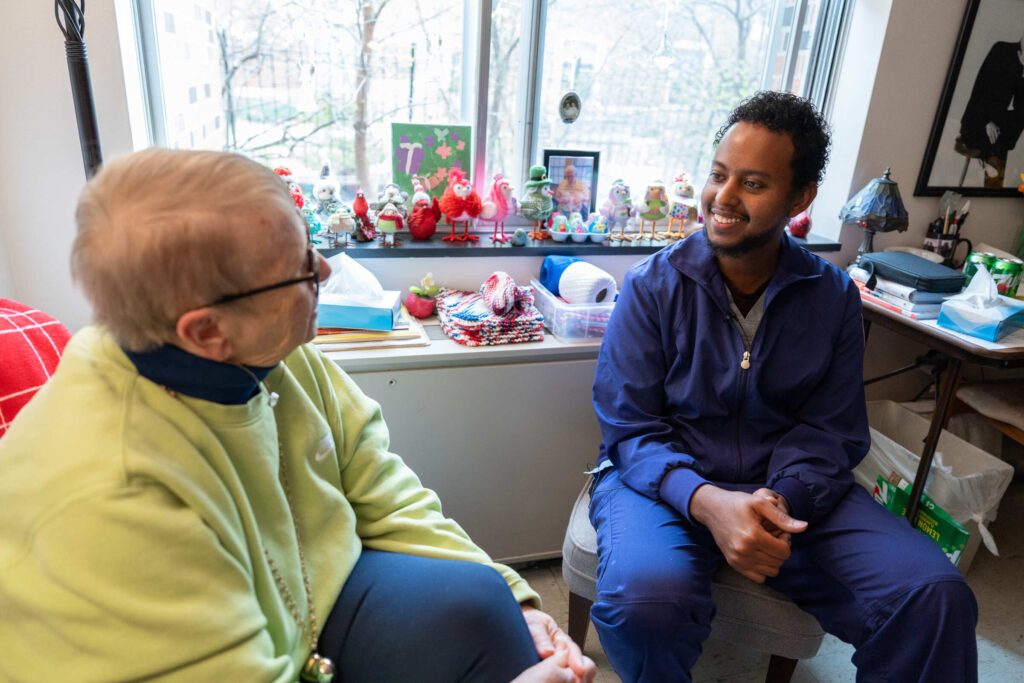
Students learn clinical excellence alongside a strong emphasis on whole-person health, health equity and the socioeconomic factors that influence care. Coursework integrates interprofessional education, preparing nurses to collaborate with physicians, therapists, social workers and community partners, as well as to advocate for systems-level change.
“Nursing is so much more than acute care. It is built on human connection,” Walker said. “Our graduates are trained to think big picture when it comes to policy, access and justice, while still providing compassionate, skilled care to individual patients.”
MSN student Alex Dountio Tsaju can attest to that. He works part-time as a nursing assistant at Regions Hospital and says the faculty at St. Thomas have helped him connect classroom learning to patient care.
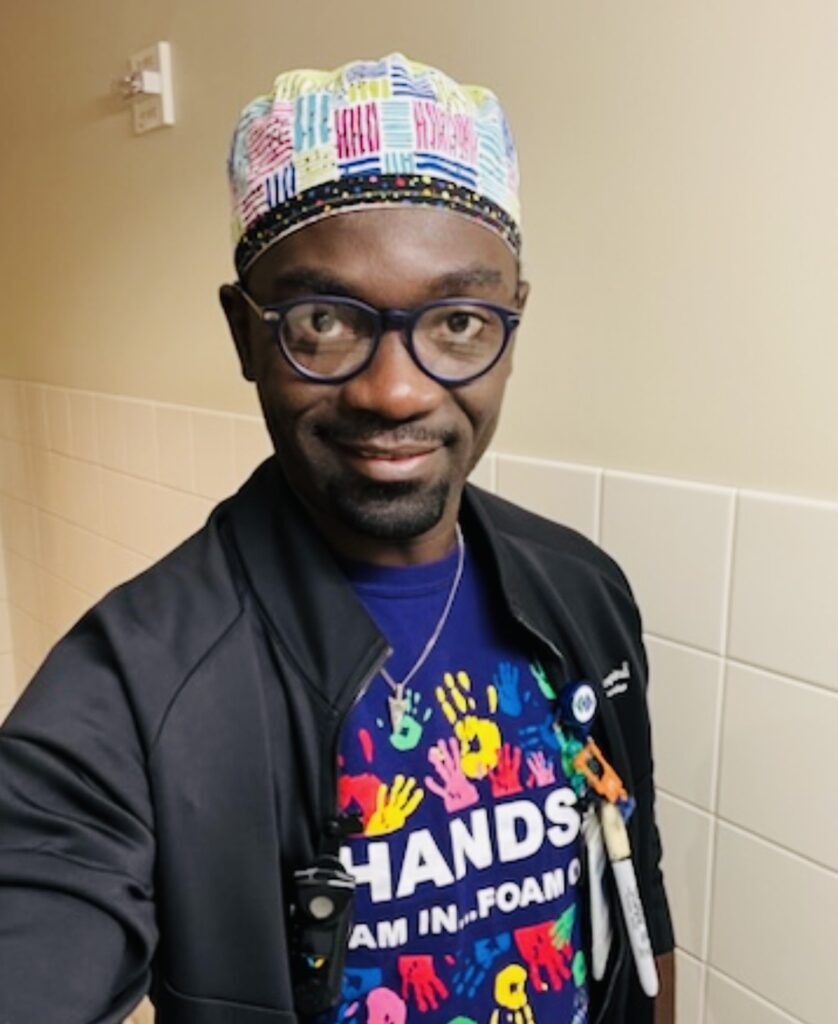
“Nursing is rigorous, and there is a lot to learn,” said Dountio Tsaju, adding that he can now put a name to some of the experiences he had working with patients, especially during the pandemic when visitations were limited. “We were the only bridge to family during Covid and that’s when I really bonded with patients and knew that nursing is what I wanted to do.” Before becoming a nursing assistant, he worked in a hospital lab.
As a non-native English speaker who moved to the United States from Cameroon about 10 years ago, he also sees the benefit of the three-year pathway program for nontraditional students.
“Having more time allows students to really focus on understanding the material and applying it well, while still balancing work, school and family responsibilities,” he said. He noted that faculty support plays an important role in that process, drawing a parallel between how nurses care for patients and how educators support students.
Faculty who practice what they teach
Many faculty members in the School of Nursing maintain active clinical roles, bringing real-world experience directly into the classroom.
“We’re not teaching hypotheticals,” Walker said. “We’re teaching what we’re seeing right now in emergency rooms, urgent care clinics and hospitals.”
Walker, who earned her advanced nursing degrees at Vanderbilt University and brings clinical experience from emergency medicine, pediatric intensive care and orthopedic trauma, continues to practice locally at Twin Cities Orthopedics Urgent Care.
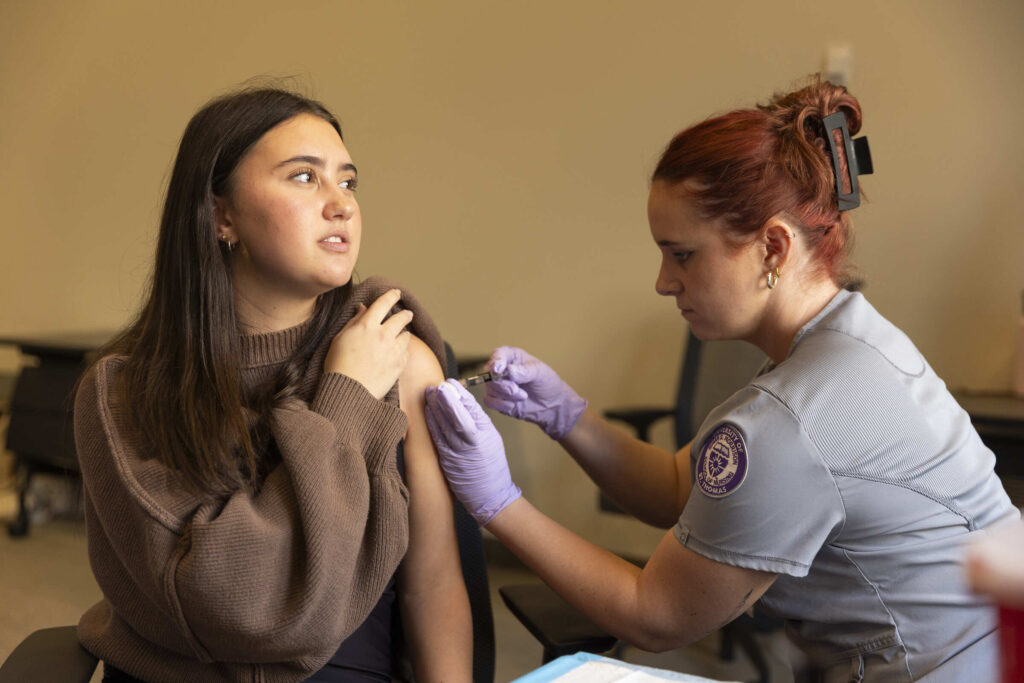
“I became a nurse because it combines several of my passions,” she said. I have always loved science and understanding how the human body works and how interventions can restore health. Nursing allows me to apply that scientific knowledge in real time, every day. Equally important, I love working with people—listening, educating, advocating, and being present during some of the most vulnerable moments in a person’s life.”
St. Thomas’ nursing program’s small-cohort model also allows faculty to stay closely connected to students’ goals, challenges and progress. This is an approach Walker sees as aligned with the university’s broader commitment to whole-person care.
“In health care, representation, perspective and lived experience matter,” she said. “When we expand who gets to become a nurse, we strengthen the profession and the communities it serves.”