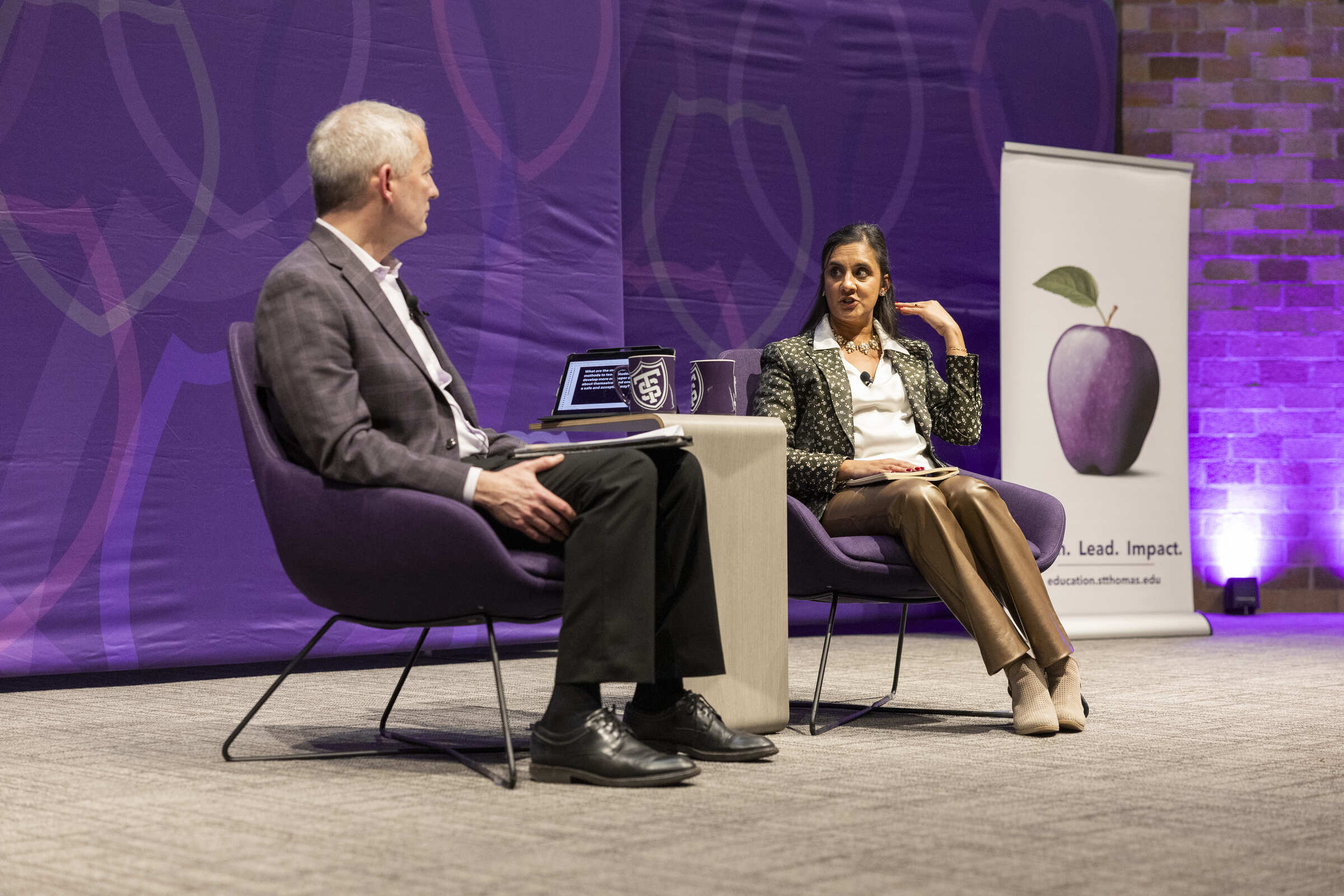
“Are you smart?” Dr. Ulcca Joshi Hansen asked the audience at the University of St. Thomas. “Or should we be asking: How are you smart?”
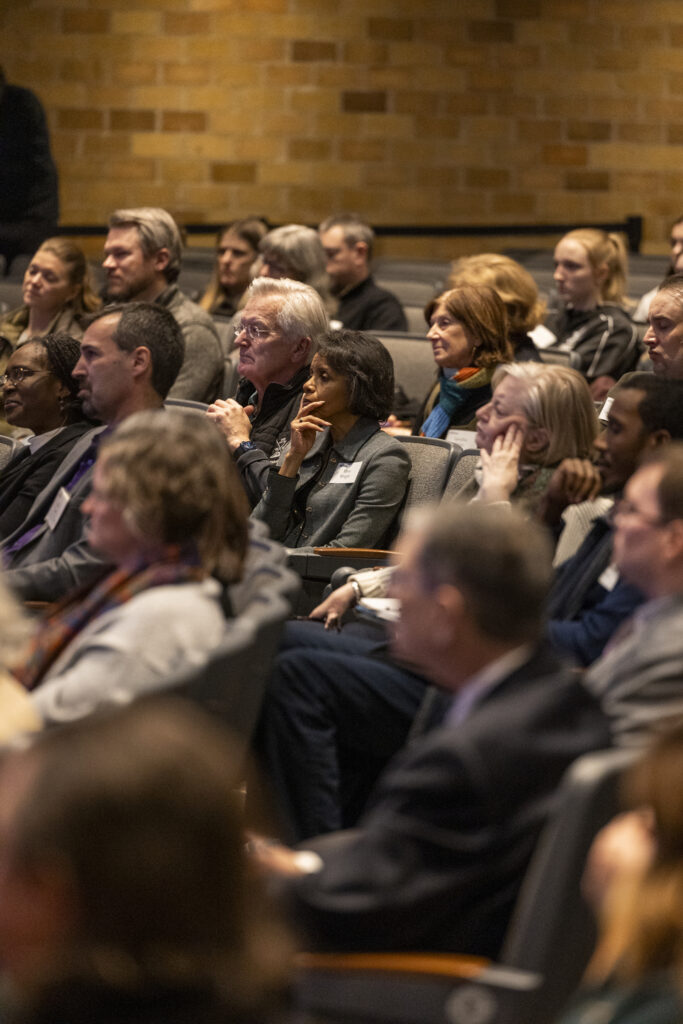
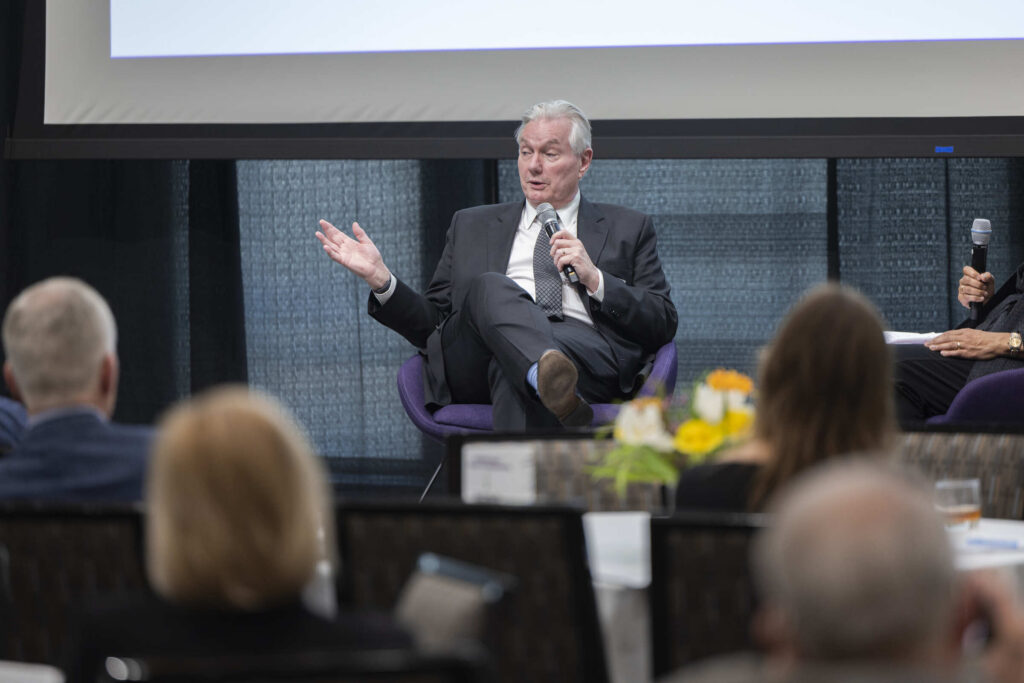
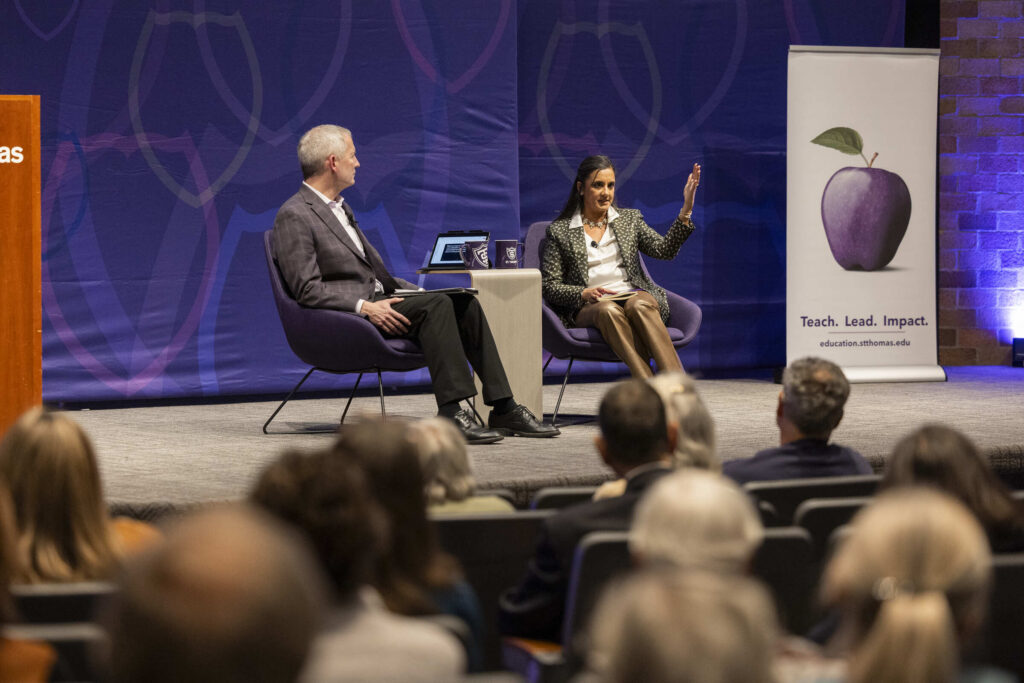
That provocative question anchored the most recent Finding Forward event, The Future of Smart Is Human, where Hansen joined President Rob Vischer for a wide-ranging conversation about the future of learning in an age defined by artificial intelligence and rapid change.
The conversation came as St. Thomas’ School of Education celebrates 75 years of preparing educators and leaders – and its intention to help shape what comes next.
Introducing the evening, Dr. Amy Smith, dean of the University of St. Thomas School of Education, framed the event as part of the university’s ongoing commitment to convening forward-looking dialogue about how institutions must evolve to meet the moment. Hansen delivered on that promise, challenging attendees to rethink long-held assumptions about intelligence, achievement and the very purpose of schooling.
In a world where AI can perform increasingly complex tasks, Hansen argued that education must double down on what machines cannot do: navigate ambiguity, discern truth, grapple with values and build meaning in community. Rather than asking students to prove whether they are “smart” by narrow standards, she urged educators to recognize and cultivate the many ways young people demonstrate intelligence.
But her challenge went deeper than technology.

Hansen encouraged the audience to question scarcity-driven definitions of achievement and to examine the structures we often take for granted. As a self-described futurist, she explained that her role is to make “the invisible visible.” She helps people see that the systems shaping education are not natural law but human constructions that can be redesigned.
“Who do we want to be?” she asked. “What would it mean to rebuild institutions that reflect the possibility of where we want to go?”
What would it mean to rebuild institutions that reflect the possibility of where we want to go?”
Throughout the conversation, Hansen advocated for classrooms grounded in connection before content. She encouraged schools to allow students to enter their education through areas they care deeply about, to demonstrate knowledge in multiple ways and to build co-intelligence with AI rather than treating it as a threat. Vischer echoed that sentiment, emphasizing that technology is not a substitute for human relationships.
The discussion also addressed equity and student disengagement. Hansen acknowledged that even well-intended efforts to standardize high expectations have sometimes narrowed opportunity, leaving some students feeling unseen.
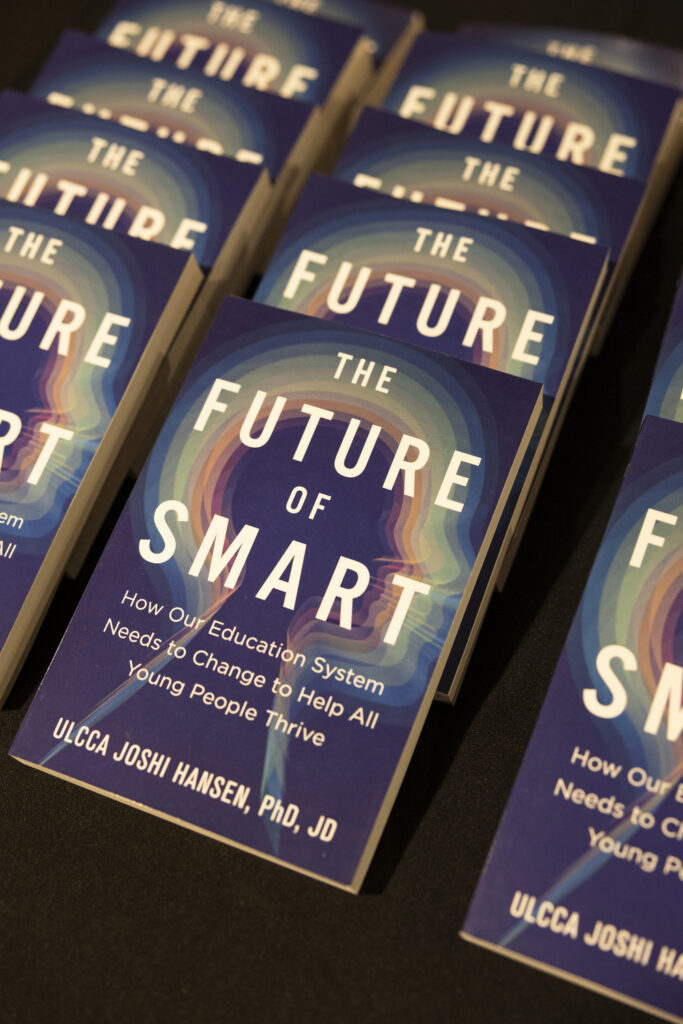
True equity, she said, means giving every young person access to the creative, exploratory opportunities that families with resources often seek for their own children. She pointed to growing distrust among young people who are “tired of adults telling them to sit down and tick the boxes,” highlighting their desire for purpose, agency and interdependence.
When Vischer asked Hansen what gives her hope, she pointed to thoughtful, empowered young people willing to question the status quo. “Nothing is fixed,” she reminded the audience. “We get to make choices.”
The future of smart, Hansen suggested, is not artificial. It is deeply, unmistakably human.