Three University of St. Thomas students began speaking at the same time, their voices overlapping until the business competition judges could no longer understand what they were saying.
The confusion was intentional.
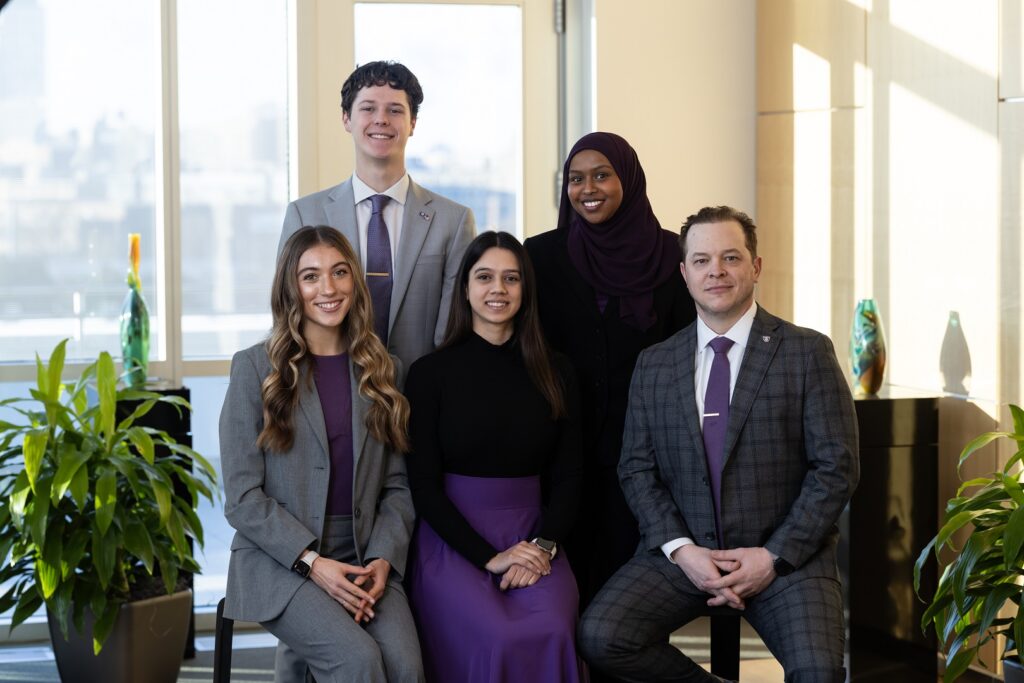
Teammates Sam Mahannah ’26, Ilham Mohamud ’26 and Breanna Ranglall ’26 simulated someone experiencing a traumatic brain injury. The moment of chaos illustrated the problem their startup, Cognition IQ, aims to solve: developing technology designed to help detect concussion risks and monitor brain health.
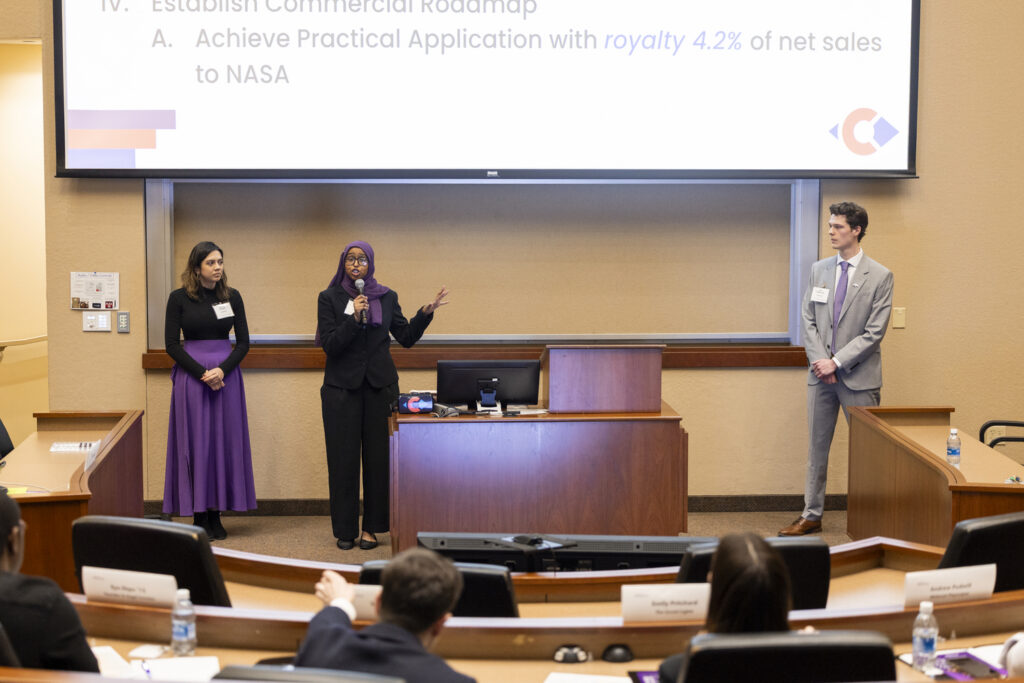
Their demonstration took place Feb. 27 during the 2026 St. Thomas Business Plan Competition at the Schulze School of Entrepreneurship. They won first place in the undergraduate division with a $10,000 grand prize.
“Being in the room with the other finalists at the St. Thomas Business Plan Competition was incredible, actually winning was an amazing honor,” said Ranglall, who is pursuing a major in computer science and data science and a minor in Spanish. “Along the way, many mentors and supporters believed in our vision and helped us move forward, and I can’t thank them enough."
Along with teammate Olivia Keller ’26, a neuroscience major, the team’s idea began through the Innovation Scholars program, where they worked with NASA researchers to explore how eye-tracking technology could measure cognitive health. After receiving encouragement to apply for a patent for their algorithm – which they successfully completed – the students began developing the concept into a commercial product.
From health technology to global health care access, St. Thomas student entrepreneurs are using campus competitions to turn ideas into startups. Programs such as the Schulze School of Entrepreneurship’s Business Plan Competition and the Fowler Global Social Innovation Challenge allow students from a wide range of majors to test business concepts, connect with mentors and compete for funding to move their ventures forward.
(Brandon Woller '17 / University of St. Thomas)
“The business challenges on campus are so powerful,” said Mahannah, a double major in finance and biology in the College of Arts and Sciences. “You can turn an idea into something that’s actually viable, and it’s all sponsored by the school.”
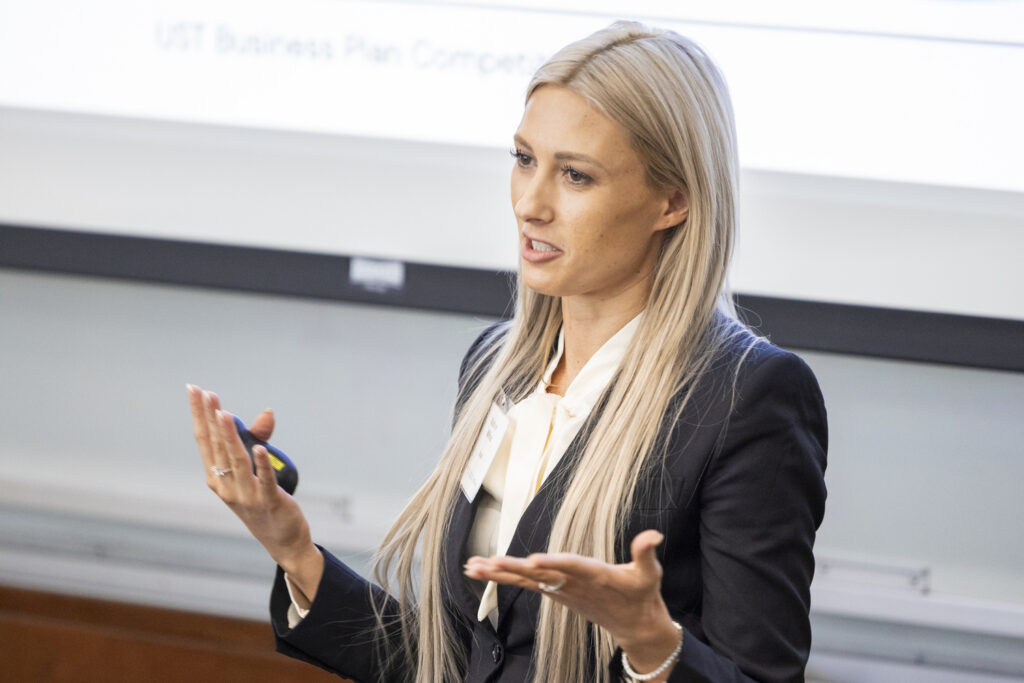
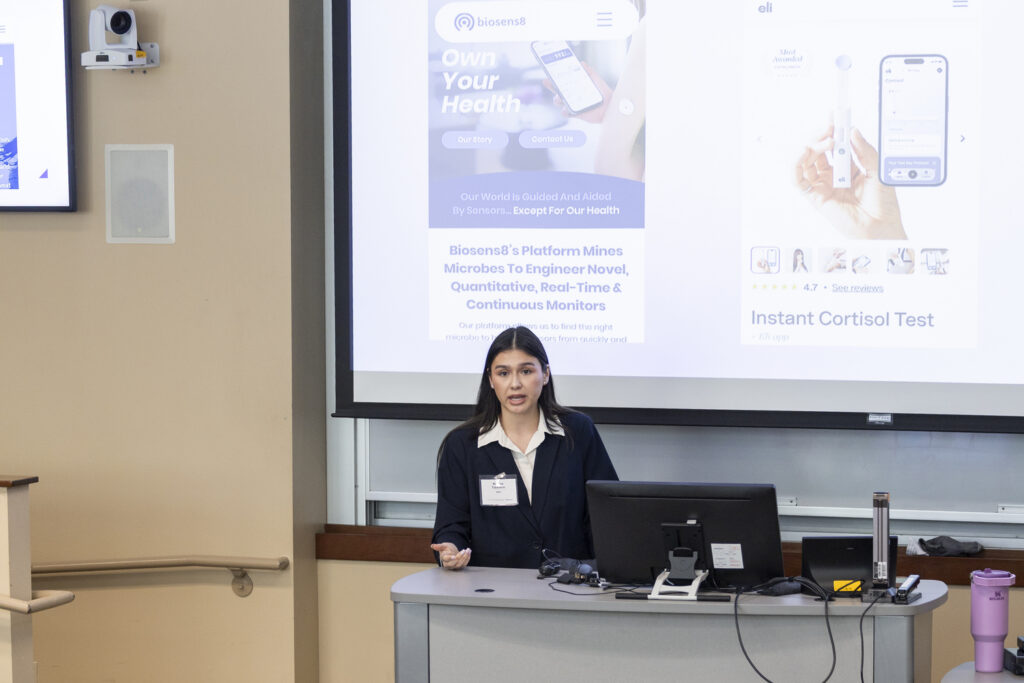
The St. Thomas Business Plan Competition awards seed funding to student ventures and helps move early-stage ideas toward viable businesses. This year’s competition drew a record 67 submissions, surpassing the previous record of 50. Students from 41 majors and disciplines entered ventures across the two divisions: undergraduate and graduate and recent alumni.
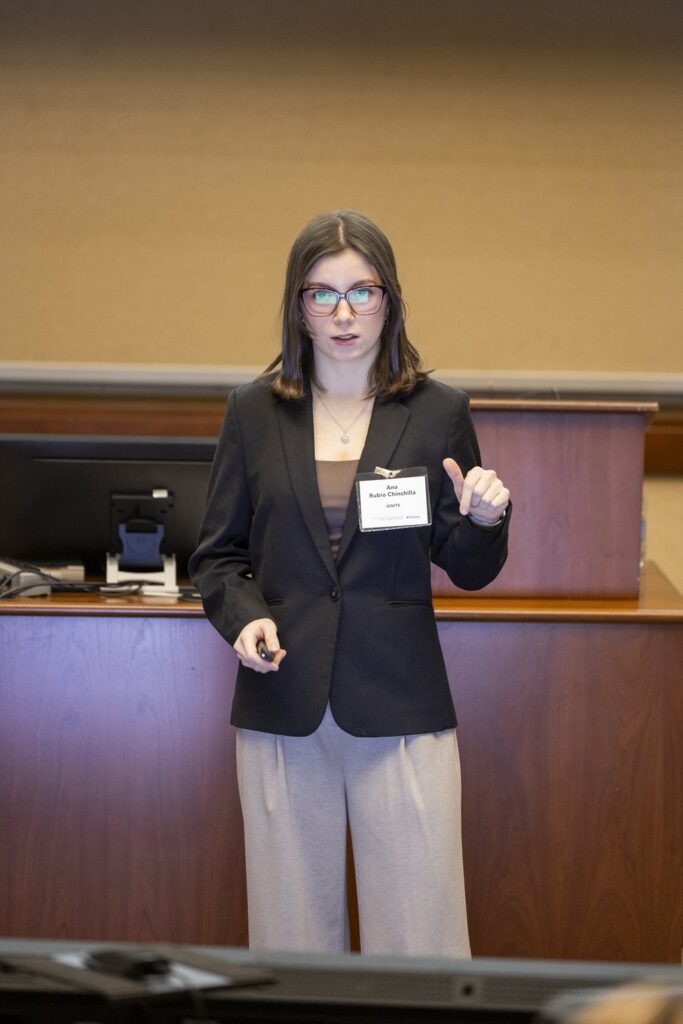
Meanwhile, at St. Thomas’ qualifying round for the Fowler Global Social Innovation Challenge, College of Arts and Sciences students, physics major Itamar Perez Ryan ’26 and biochemistry major Ana Rubio Chinchilla ’27, developed an idea after asking a simple question: What if Americans in need of affordable medical care could help fill empty hospital beds in Latin America?
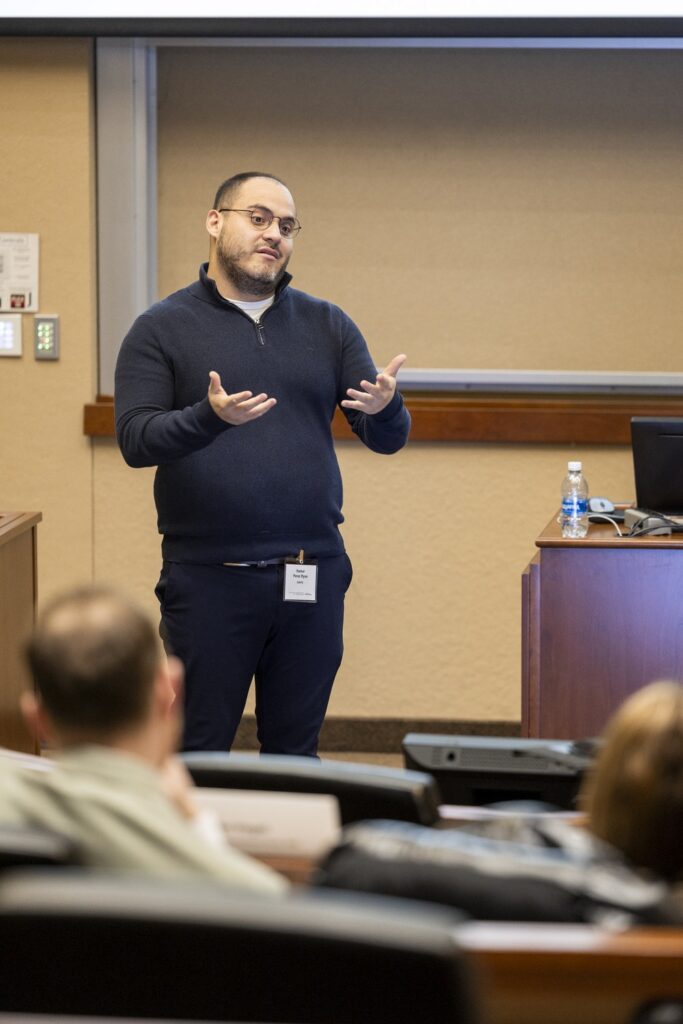
(Brandon Woller '17 / University of St. Thomas)
Research indicates that approximately 77 million people in the United States are either underinsured or uninsured due to the high health care costs, while nearly half of the hospital beds in accredited Latin American hospitals remain unused each day. Their business concept – IGNITE, an artificial intelligence health care marketplace – is designed to connect Americans to lower-cost procedures at accredited hospitals in Latin America.
“We’re not here to change the health care system,” Perez Ryan told the Fowler GSIC judges. “We’re just here to connect it.”
The Fowler Global Social Innovation Challenge is an international social venture competition that encourages students to develop businesses addressing global issues aligned with the United Nations Sustainable Development Goals. The program connects more than 2,500 students across 17 countries and has distributed more than $750,000 in seed funding to emerging ventures. Last month’s qualifying round determined which students would represent St. Thomas in the larger competition, which is jointly run with the University of San Diego.
Winners and finalists are listed below.
Business Plan Competition winners
Undergraduate division
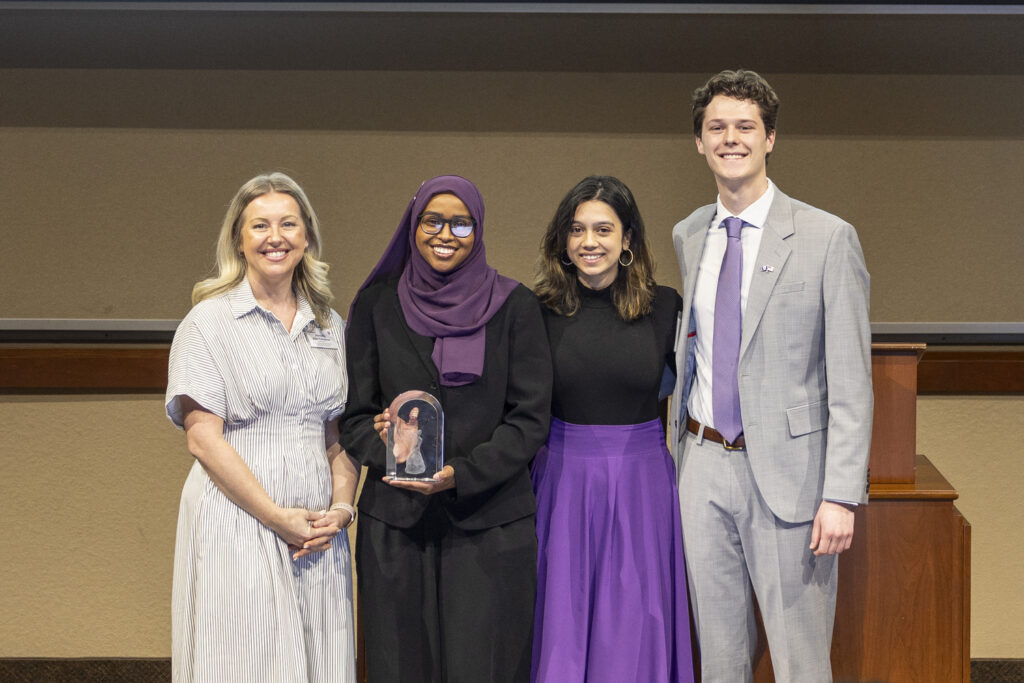
First place ($10,000). CognitionIQ - The student team uses NASA-patented eye-tracking algorithms to support objective concussion and cognitive-safety assessments for student-athletes. Team members are Sam Mahannah ’26, Ilham Mohamud ’26, Olivia Keller ’26 and Breanna Ranglall ’26.
Second place ($5,000). RE:BORN - The venture collects donated clothing, recycles it into new fabric through partners, and sells limited-edition apparel online. Founder Mindy Nguyen ’28 leads the project.
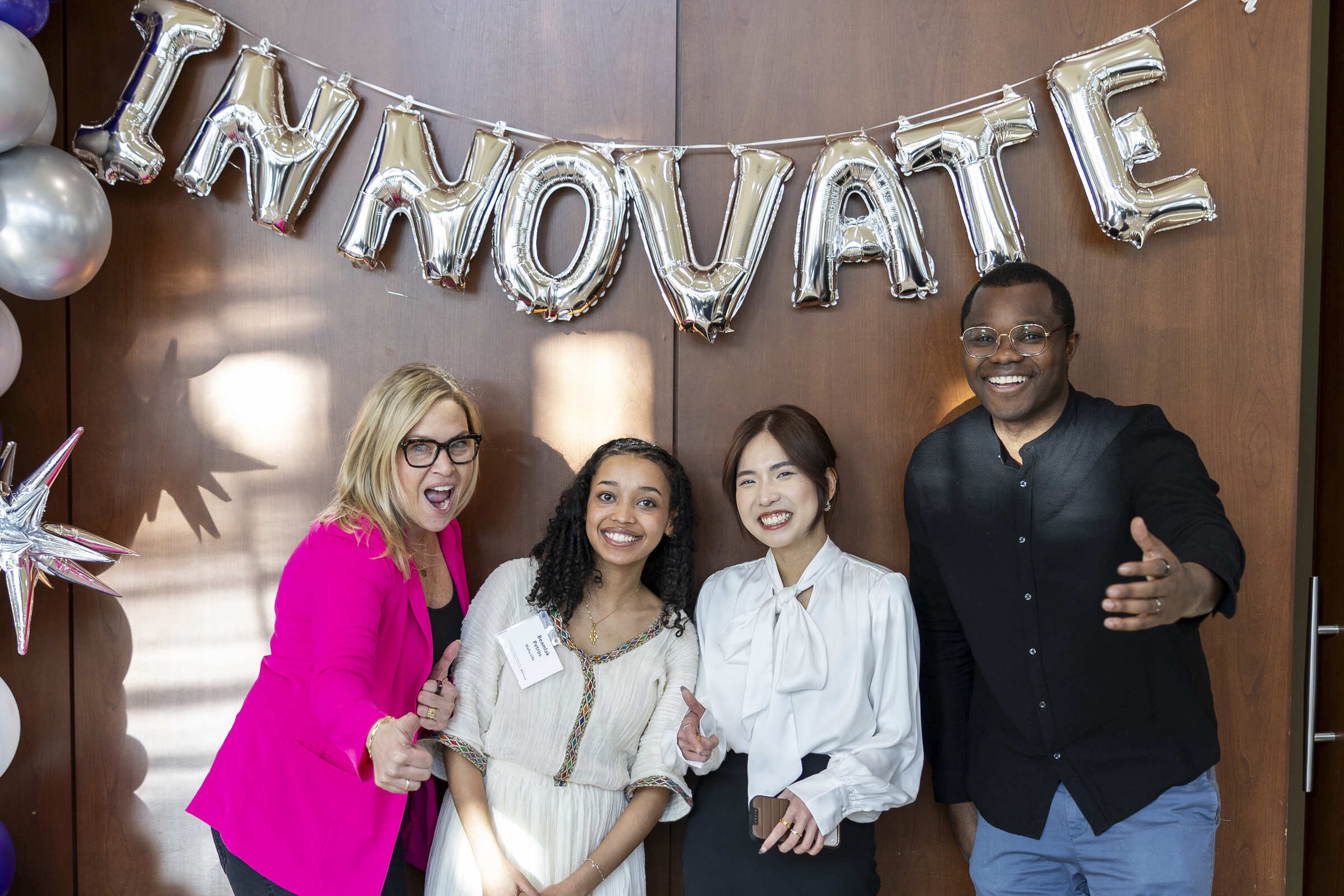
Third place ($2,500). Weha Life - The venture uses solar-powered desalination to convert brackish water from Lake Beseka into drinking water for households and bulk customers in Ethiopia. Founder Beamlak Petros ’26 leads the project.
Finalists ($1,000).: IGNITE and Ruta’al finished as finalists.
Graduate and recent alumni division
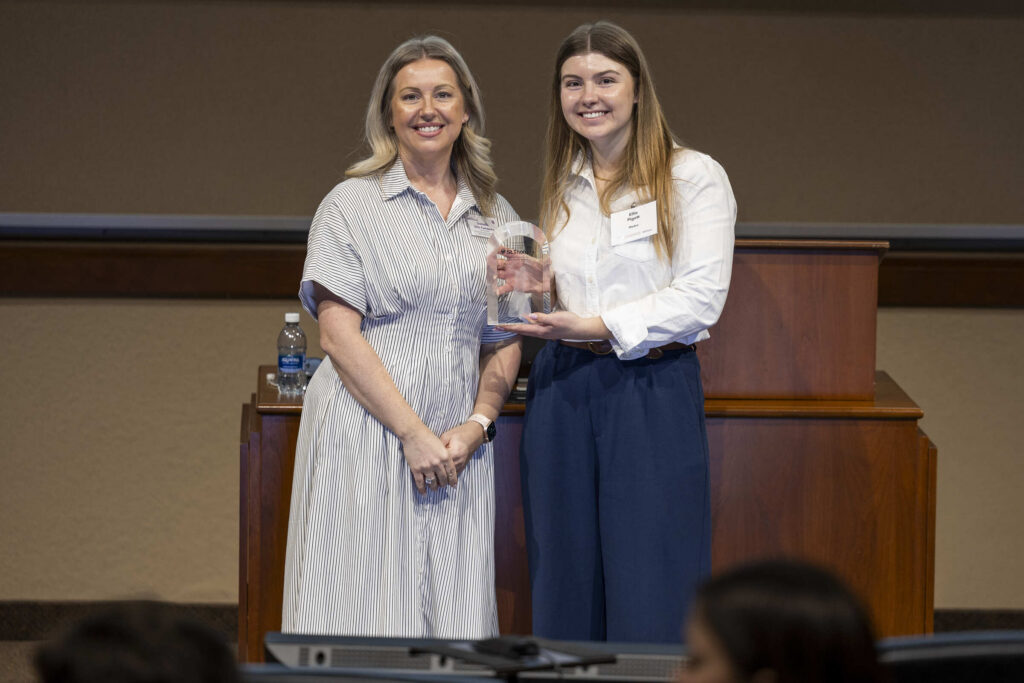
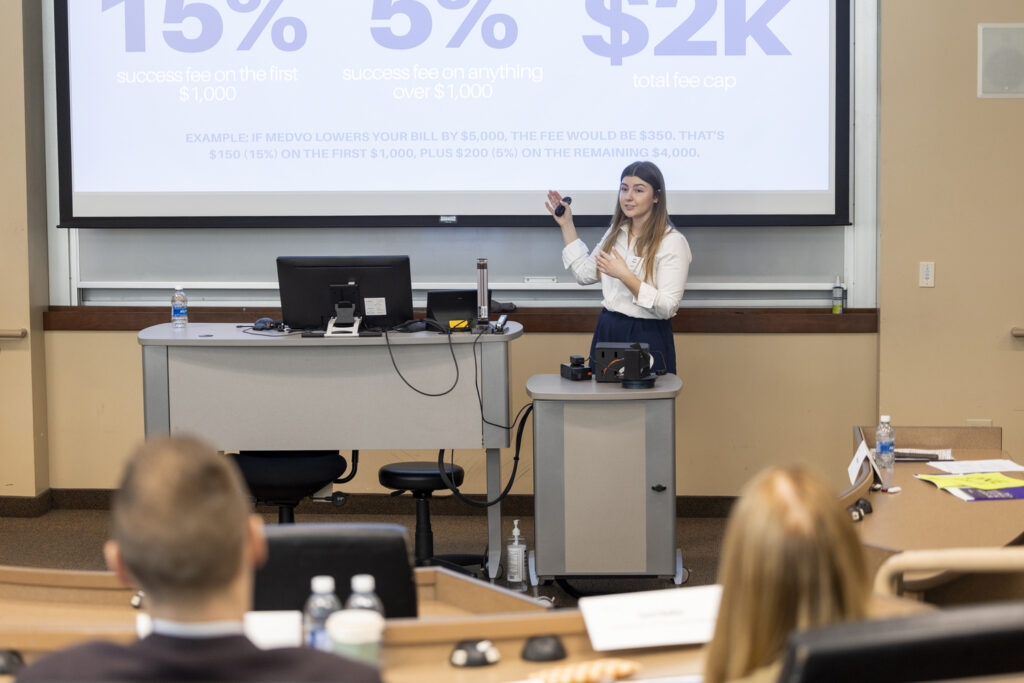
First place ($10,000). Medvo - The venture is an AI-powered medical billing advocacy platform that identifies billing errors, disputes incorrect charges, and negotiates reductions for patients. Founder Ellie Pigott ’23 leads the project.
Second place ($5,000). Nuubi - The venture offers an AI-enhanced help forum embedded in a university’s existing platform, providing 24/7 course support along with instructor analytics. Founder Kathryn Wifvat ’16 leads the project.
Third place ($2,500). Weber Blooms and Orchard LLC - The company is a vertically integrated Minnesota cut-flower venture focused on peony cultivation paired with cold storage infrastructure. Founder Michael Weber ’16 leads the project.
Finalists ($1,000).: HelioHeater and Halo finished as finalists.
Fowler Global Social Innovation Challenge
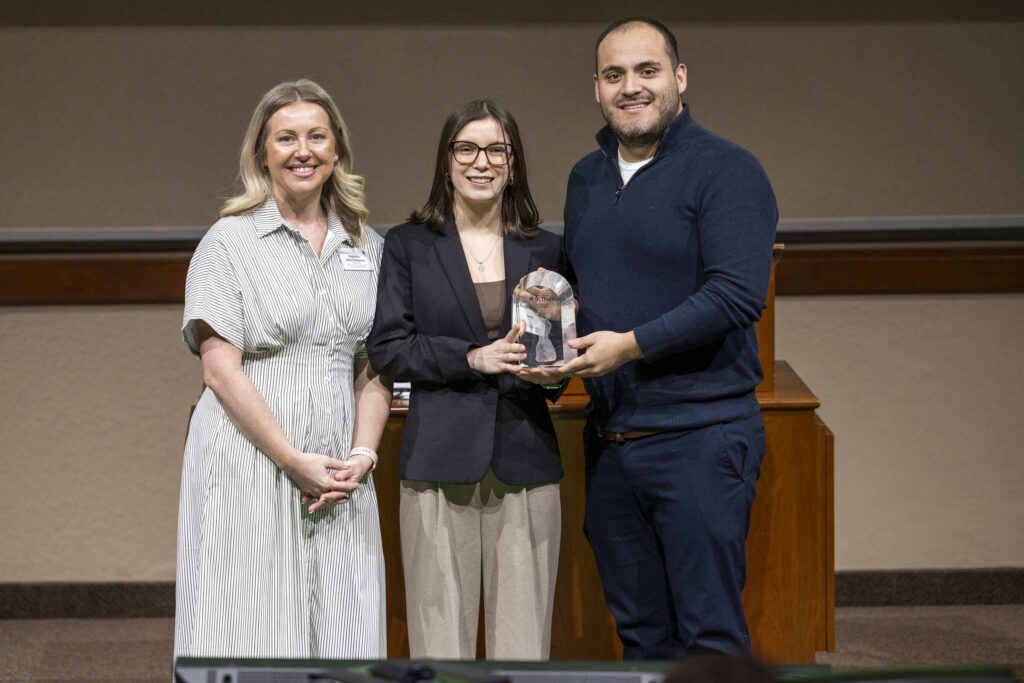
First place ($6,000). IGNITE - The venture is an artificial intelligence-powered health care marketplace that connects uninsured and underinsured U.S. patients with JCI-accredited hospitals in Latin America. Team members are Itamar Perez Ryan, and Ana Rubio Chinchilla.
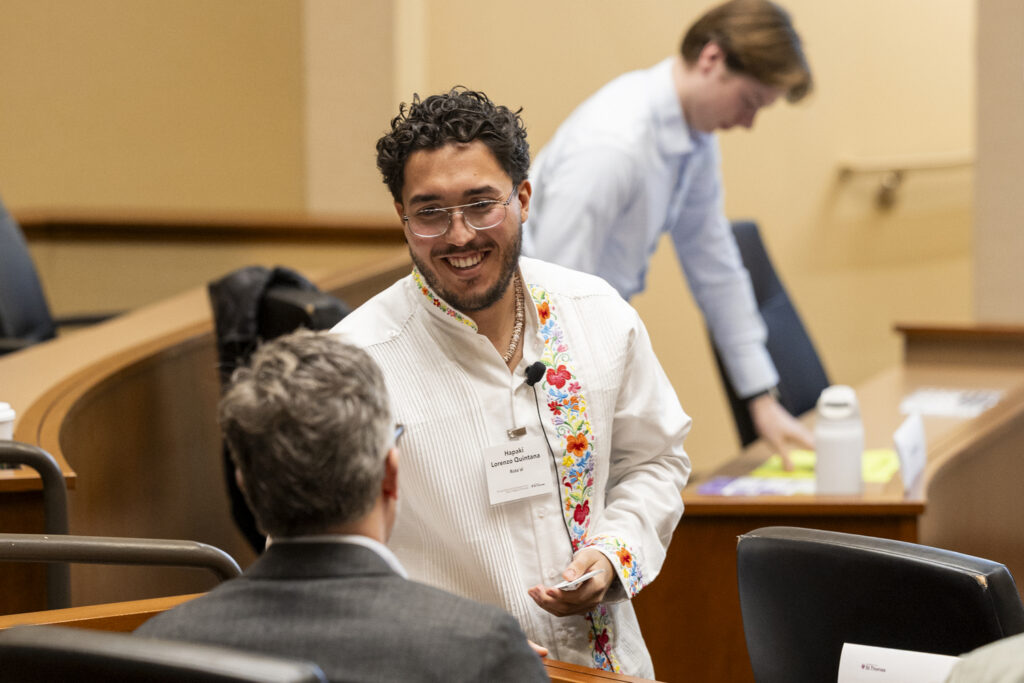
Second place ($3,000). Ruta’al - The venture provides banking and credit access for unbanked rural communities in Mexico and Nepal through local agents and USSD phone technology. Team members are Hapaki Lorenzo Quintan aand Sambhav Lamichhane.
Third place ($1,500) Judi Wine - The venture produces sweet wines in northern Uganda and emphasizes training and employment for young women and single mothers. Founder Simon Latim leads the project.
Finalists ($750).: MERIS and AI Multimodal Systems finished as finalists.


Related Articles
Innovation Scholars Present Research to NASA
Business & Law