On clear nights in rural Kenya, where Brother Guy Consolmagno once served as a Peace Corps volunteer in the mid-1980s, he would carry a small telescope outside and draw a crowd.
“Everybody wanted to look through the telescope,” he said.
Consolmagno, who now lives in Italy, invited Kenyan farmers, students and families to peer through the lens at stars many had never seen so clearly before. Their questions came quickly.
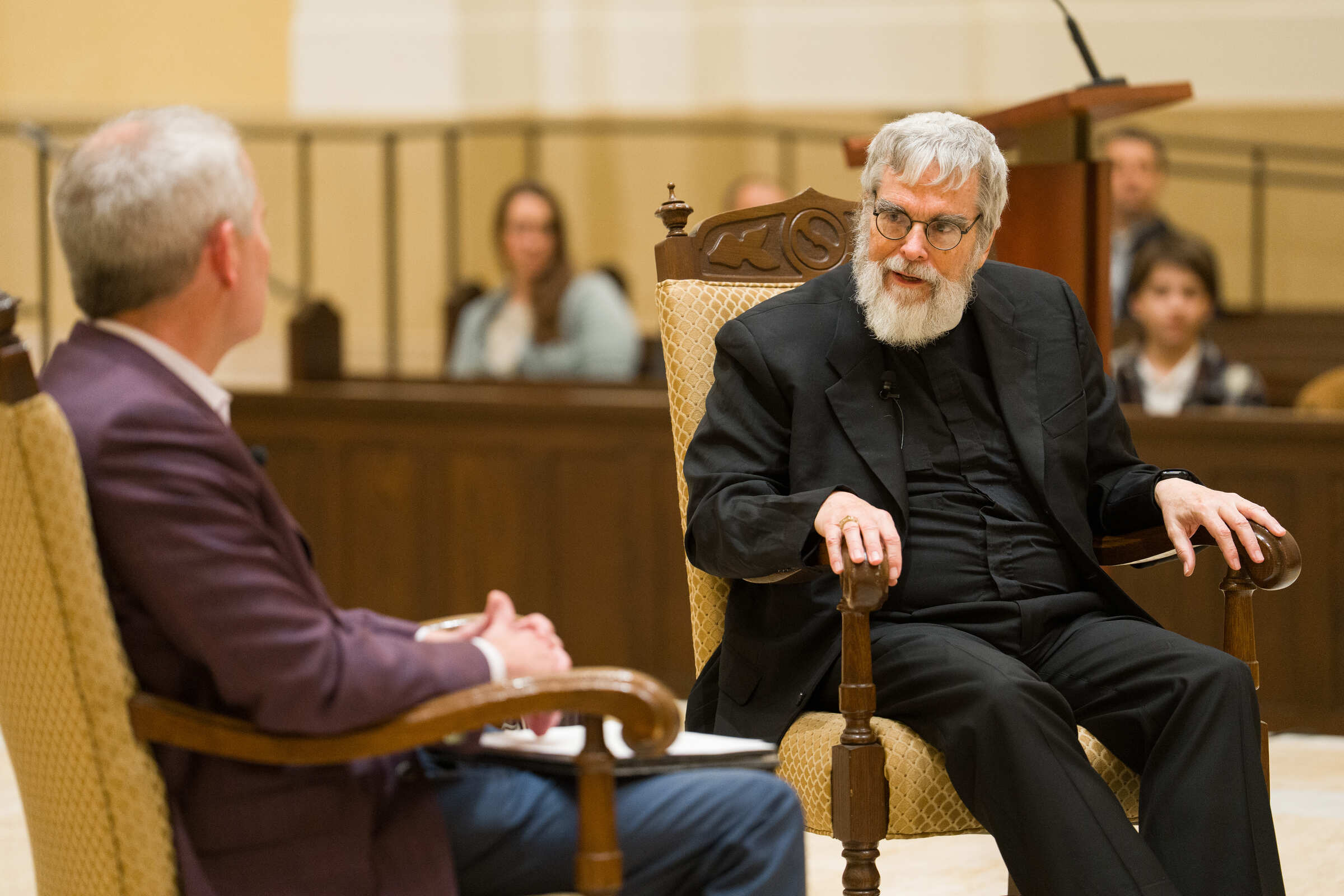
Why are there stars? What are they made of? And perhaps most deeply: Who are we compared to those stars? Those same questions about the universe and humanity’s place within it, were at the center of a Finding Forward conversation at the University of St. Thomas.
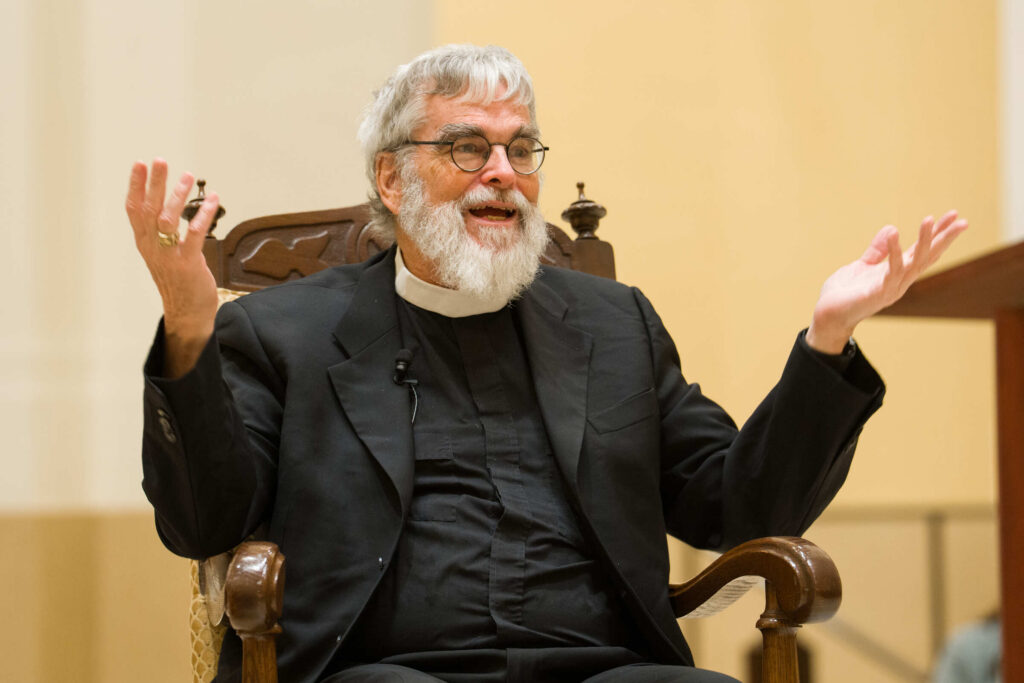
A Detroit native Jesuit brother and planetary scientist who has spent decades studying asteroids and meteorites and once directed the Vatican Observatory, Consolmagno immediately asked and answered a question many in the St. Thomas audience may have wondered:
“Why do we do astronomy?” he said. “It’s to feed our souls.”
Consolmagno added that science and faith are not opposing forces, but complementary ways of seeking truth. He joined President Rob Vischer for Finding Forward to help attendees explore the relationship between faith, reason and the cosmos.
This particular night’s event, which took place in the Chapel of St. Thomas Aquinas on the university’s St. Paul campus, was in a fitting location for a conversation about the relationship between scientific discovery and spiritual inquiry. Presented in partnership with the Claritas Initiative, which brings together lectures, discussions and academic programming across disciplines to explore how beauty, truth and goodness shape intellectual life at St. Thomas and within the Catholic tradition.
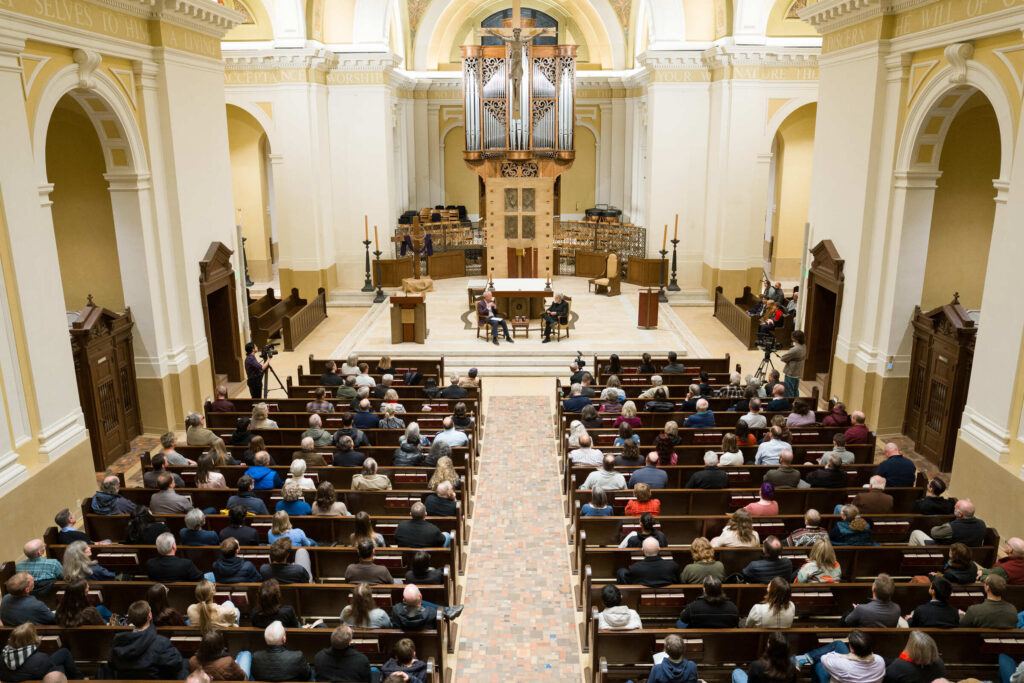
Astronomy offers a natural entry point into these areas.
One reason, Consolmagno said, is simple: “We all live under the same sky.”
Whether someone is a farmer in Kenya or a scientist at MIT, people share the same sense of awe when they look at the stars.
“People of all faiths have that same reaction to beauty, that same reaction to truth and that same sense of wonder,” he said.
Vischer used that idea to guide the conversation toward one of the evening’s central questions.
“How do we reconcile faith and reason?” he asked. “Are science and religion really in conflict, or are they companions in the search for truth?”
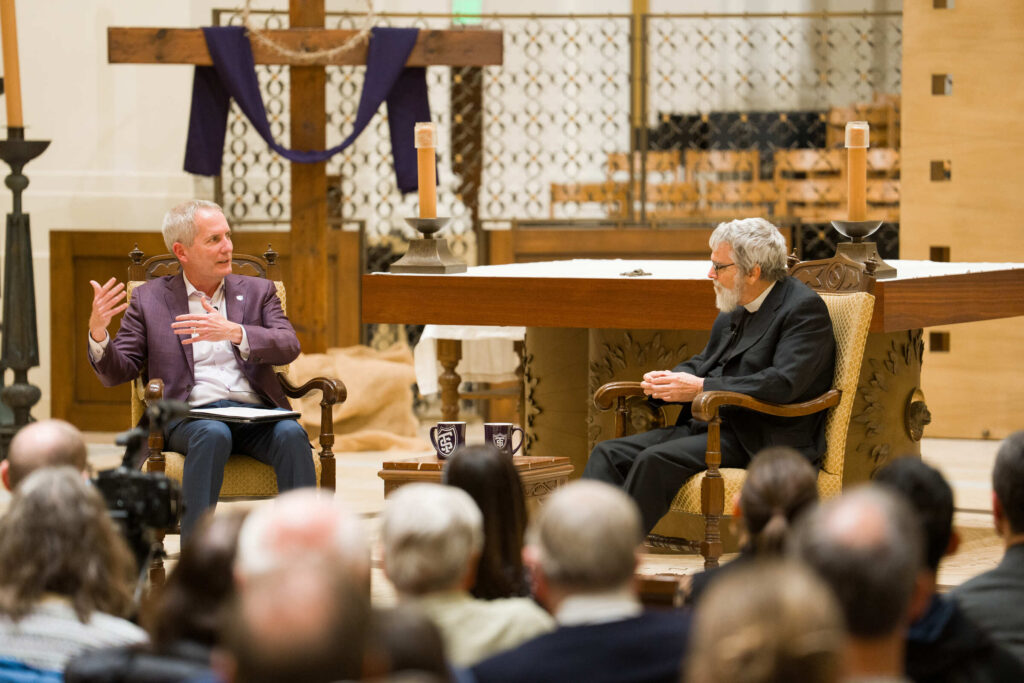
For Consolmagno, the answer is the opposite: “Faith and reason are the two wings that bring us to the truth,” he said, quoting Pope John Paul II. “Neither faith nor reason are the goal,” he added. “Truth is the goal.”
Throughout the evening, Consolmagno emphasized that scientific discovery often begins not with certainty but with curiosity, and sometimes with failure. Moments when theories break down or assumptions prove wrong are often the moments when scientists learn the most.

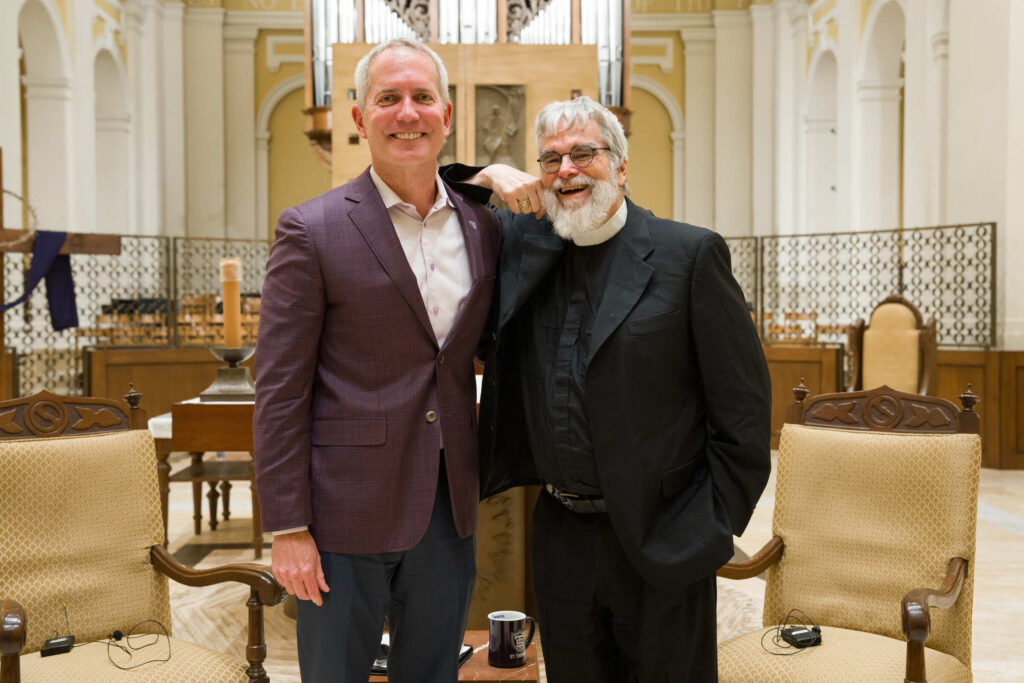
Vischer also raised questions about how conversations about science and faith unfold in an era often marked by polarization and skepticism toward institutions.
Astronomy, Consolmagno said, offers a rare form of common ground: when people look at the night sky, political labels and ideological divides tend to fade.
“There is a place," he said, "where we can talk together.”