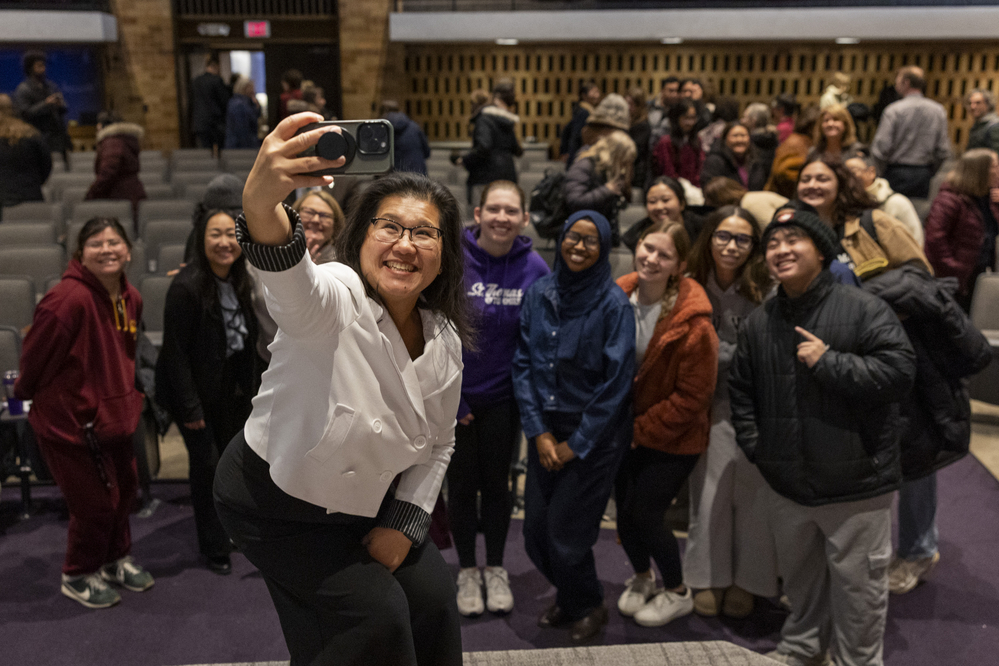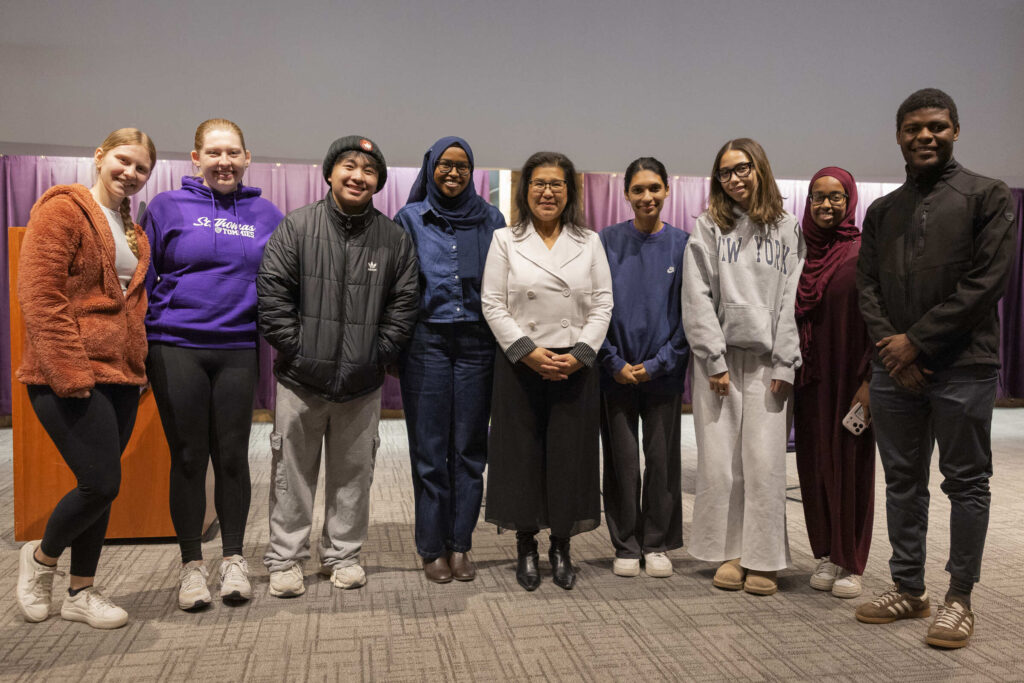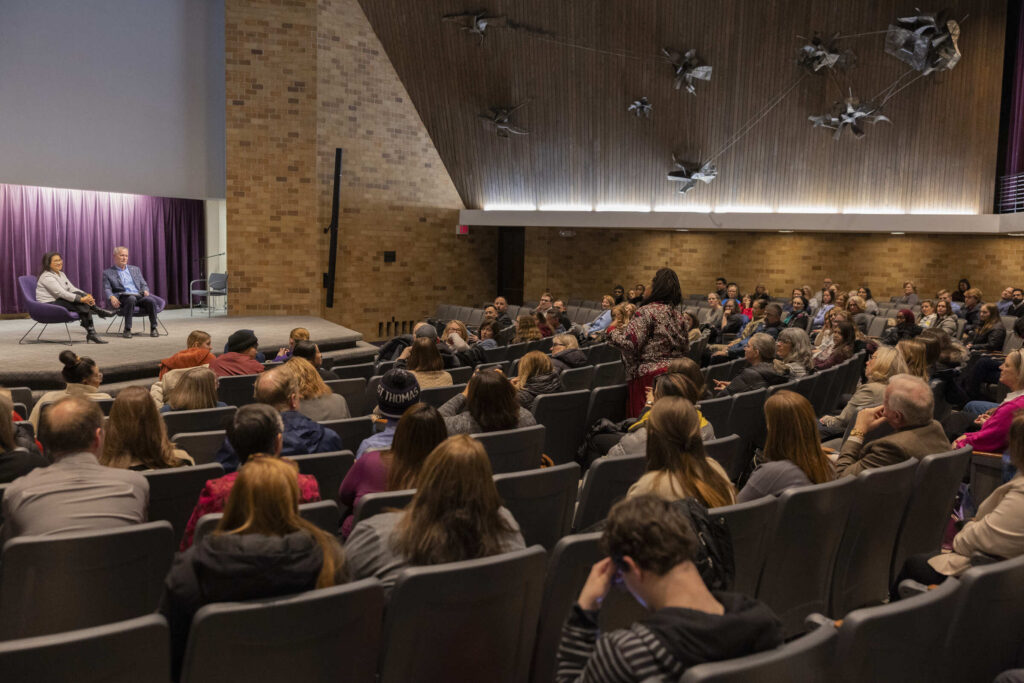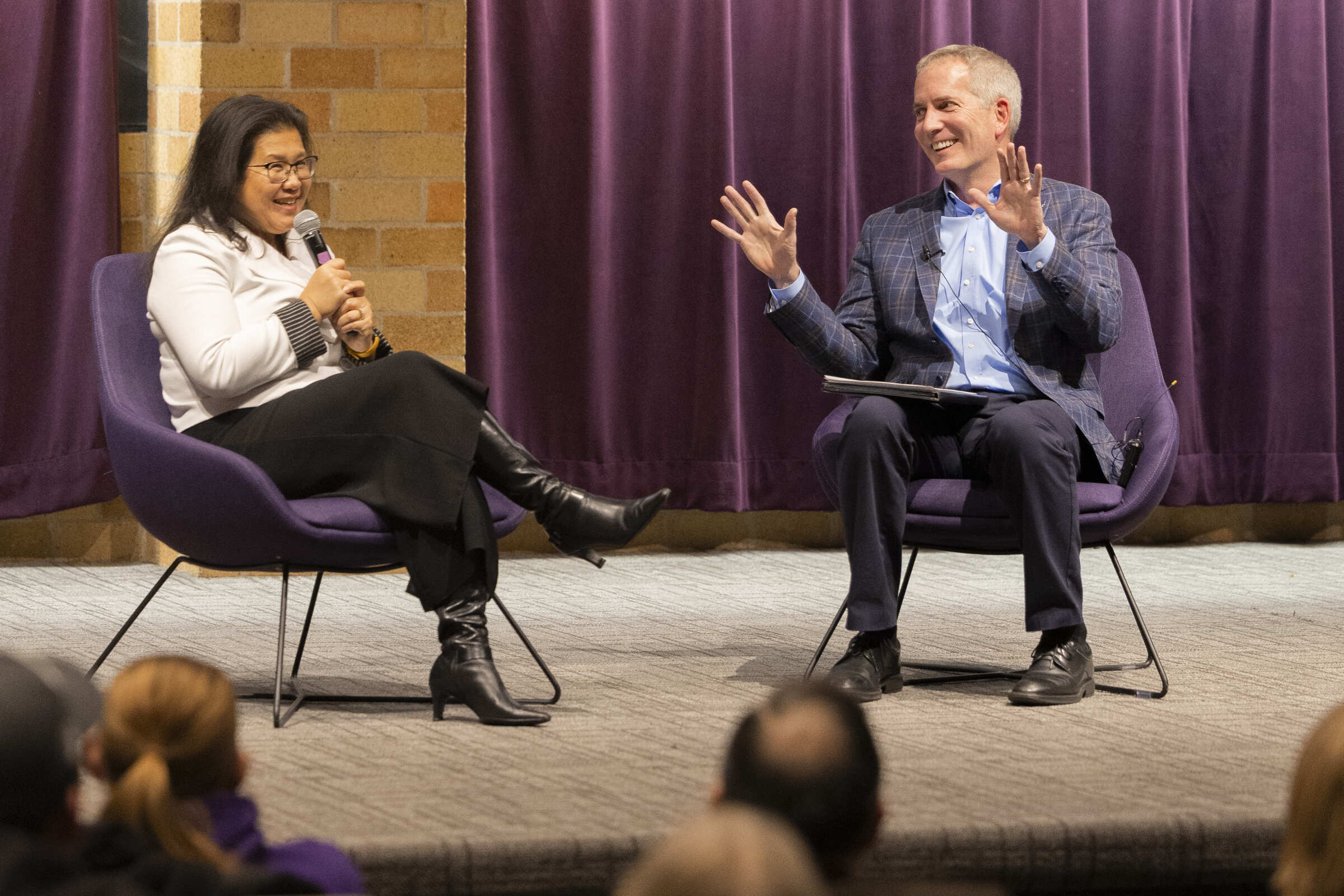
When St. Paul Mayor-Elect Kaohly Vang Her sat down with University of St. Thomas President Rob Vischer for a recent fireside chat, the conversation touched on the role education has played in her life. For Her, a current doctoral student in educational leadership at St. Thomas, higher education has been both a personal lifeline and a defining influence on her approach to leadership.
Her’s family fled Laos when she was 3 years old. Growing up in poverty in the U.S., Her’s father made sure she knew obtaining an education was essential.
“At all costs, no matter what happens, you finish your education,” she said her father told her.
Her commitment to education carried her through a bachelor’s degree and an MBA. She described her decision to pursue a doctorate at St. Thomas’ School of Education as transformative in helping her understand systemic injustices she observed in society, and opened the door to work in public service.

Her, who defeated incumbent Mayor Melvin Carter after ranked-choice voting, is the first Hmong woman and person of Hmong descent to be elected mayor of St. Paul. Her journey also includes being among the first Hmong American women elected to the Minnesota House and co-founding the nation's first Hmong American PAC (Maiv-PAC).
She was also the first in her family to enroll in a doctoral program.
“Had I not been to this program, I would have never gone on to be a state representative,” she said.
Her legislative work included authoring a bill, now the Fostering Independence Grant (FIG) program, which guarantees free college for any student who has ever been in the foster care system. That accomplishment reflects her broader belief that education is essential to community strength and economic mobility.
“Higher ed is so important to me,” she said. “The strength of Minnesota and why so many immigrant communities come here is because of our education system. Businesses choose to be here because we have an educated workforce.”
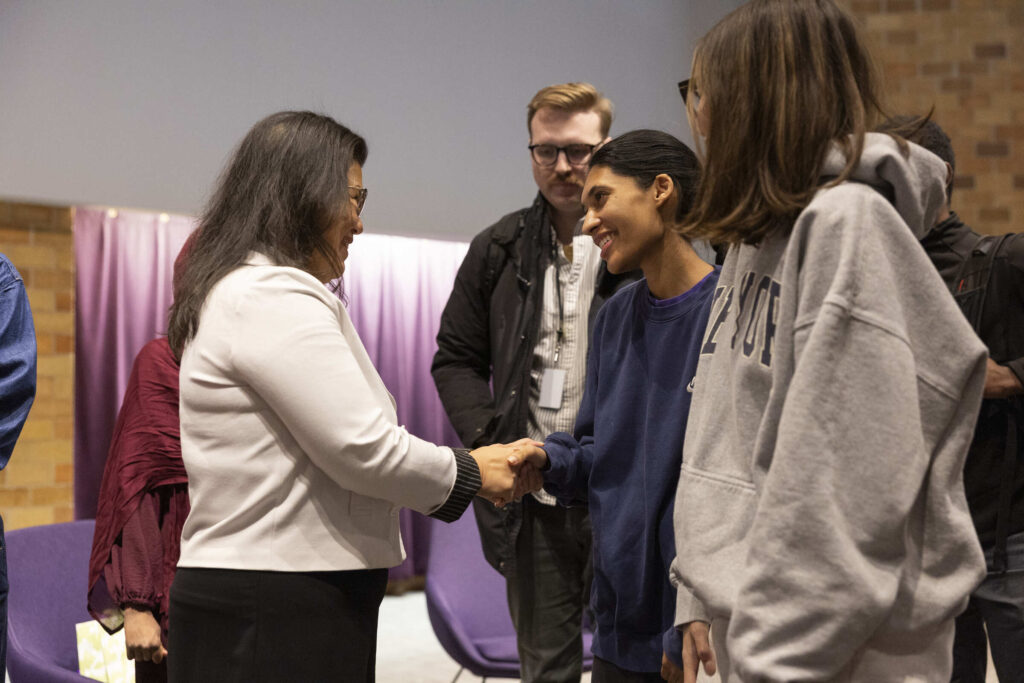
As mayor-elect, Her said she plans to prioritize collaboration across K–12 schools, higher ed institutions, and policymakers. She emphasized that cities have a role to play in advocating for education funding and support.
“Our kids can’t get to higher ed if they can’t get through K–12 … Education and funding education would be part of my legislative agenda when I go up to the Capitol to talk about what’s important to my city,” she said.
Despite the challenges facing schools and communities today, Her said she draws hope from what she sees in college students and recent graduates.
“Whatever is happening in our higher ed institutions, it is teaching people to think critically,” she said. “Young people are … so much more prepared to take on the challenges of this world … That is what gives me hope.”